Home Blog Page 2

Things we Bought & Borrowed for our Newborn

1

Once morning sickness faded and we were past critical months in our pregnancy we got excited to get our house ready for our baby. Like the most of the parents we wanted to have everything that could make our and our baby’s life comfortable. So we made a list, did our research and then went ahead and bought or borrowed things we though will be useful to have. In this post we will share with you all the the things we bought and borrowed for our newborn.

In total we spent about Rs. 30,000 to get the home ready for our baby. We saved a lot of money and time because of hand me downs we received from family and friends.

Things we Bought

Things we bought for Kabir

Images below have affiliate links.

1. Baby Cot- Rs. 19,000

We wanted to sleep with the baby in the same room in the night but not in the same bed. So, We bought Baby-hug Aspen Wooden Cot Cum Bed. He can use the cot till Age 4. It is made of new Zealand pine wood, it is a very light wood but finish and make is good. We have joined it to our own bed so that we can easily keep a watch on our son in the night. This way it is easy to soothe him as and when needed without disturbing our own comfort. We bought simple foam mattress to go with the cot.

We purchased this online from Firstcry. I found they have most choice available in baby furniture.

2. R for Rabbit Car Seat Rs 6,000

It is comfortable for an infant and can be used till age 7. After we got discharged from the hospital, I stepped outside with kabir in my hands, suddenly everything seemed so big and he in comparison seemed so fragile. I was scared to carry him home in my arms. during the drive I was aware of every pothole and turn. I reached home and I knew I had to order a car seat right away. He enjoys sitting in his little car seat and I do not have to worry about holding him in my hands. Also eventually we may not be able to always go out in pair, so it makes sense to get him used to sit by himself in a car seat.

We bought the car seat online from Amazon. here is the link:

3. Cradle- Rs, 3,200

Baby loves rhythmic movements and Kabir is no different. We bought him cradle after we saw him enjoying his cradle in the hospital. He sleeps longer in the cradle, because we gently rock him from time to time. He takes his day naps in the cradle.

Though cradle can only be used for short duration it is really helpful with 0-3 months babies because these initial months are tough on every one and if something can make your baby sleep longer trust me it is most welcome. Also, the cradle has wheels so we can move it around the house, this has been a useful feature too. This way we can easily  move him from room to room even when he is sleeping.

We purchased this online from Amazon. here is the link:

4. Feeding Pillow Rs. 1,100

A simple foam pillow can do such a magic. It is a blessing for me- as a new mother I had to sit for hours to breastfeed Kabir. the feeing pillow provides nice platform for Kabir to lie down while feeding, and it also support my back  It is one of our most favourite and inexpensive buy! I highly recommend it.

We purchased it online from Amazon. here is the link-

Things we borrowed
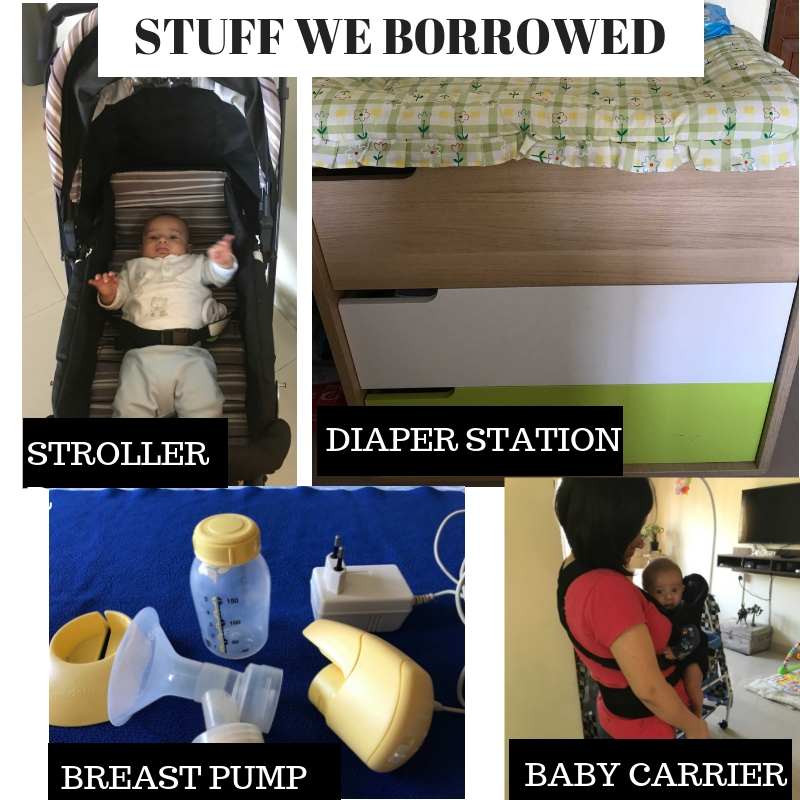
https://savinghabit.com/wp-content/uploads/2019/01/Things-we-borrowed-for-baby-kabir-

1. Diaper changing cum storage unit

After C-section it is not comfortable to bend. Our friends gave us their son’s diaper changing table which also has 3 drawers. It is high enough so that you can change your baby’s diaper standing and for a new born you have to change a lots of diaper. This table saved us some major back aches.

Again in those initial days when everyone is overwhelmed these small things do help. Though I would not recommend you to buy diaper changing station if you are on budget, you can simply use any high table available at home. But if you have to buy a storage for your baby’s clothes then you can look at one of the table cum storage options.

2. Baby Stroller

This is a hand me down from Kabir’s older cousin. He has not used this much yet. it will come handy when we will restart our evening walks at the beach and joggers park in a month or two. It is a mee mee stroller.

3. Baby Carrier

It secures baby nicely to our chest when we are going out. what I love about it is a more safe way to carry baby around in crowded places and also that our hands are free. It is a Mothercare carrier. We do not go out with the baby that often so we have used it only on 2-3 occasions yet.

4. Electric Breast Pump

It was a saviour and at some point all new mothers may have to use an electric or manual breast pump. I got mine pre-loved from my Kinder Garden friend. Again it was essential for me though I only used it for few days I could not have done without it. It is a Medela electric pump.

I wouldn’t advice anyone to buy it in advance. Wait and discuss with your paediatrician before you buy one.

I think we could have done without every thing we borrowed except the breast pump. So, while it is good to have all these things they are not essential. 

Buying Vs. Borrowing- 4 Good Reason to consider borrowing

At the planning stage we did get bit carried away and made a list of all possible things and gadgets to buy for our son:-) the feeling parents have to provide best for their kids- we now understand it and feel the same way.

If money was the only consideration we may have just gone ahead and bought all of it. But we figured some very good reasons besides saving money for getting few hands me down from family and friends.

Kabir with his christmas stockings

Kabir with his Christmas stocking!

  1. Kids grow out of things very fast: Any parent can vouch that kids grow out of things very fast. We bough a cradle for our son and he can only use it till he begins to turn which make total usage to 3- 6 months. I am already petrified with what I will do with all the things that our kid is outgrowing. I hope to find someone soon who can use them.
  2. Saves the environment (prevents landfill): For us this is an equally important reason. we want our kids to grow amongst trees and breath clean air. So we do as much as we can to reduce our carbon footprint.
  3. Saves Time: Not to forget hand me downs also saves time and effort of doing research before buying. I got an old breast pump from my Best-friend and it saved me hours of research.
  4. Baby does not care about stuff yet:  Take advantage of this time because soon they will have long lists of things they want from you! and you will have to gladly oblige for the rest of your life:-)

To Know about our pregnancy cost in Goa, read this.

We have also written here about our plan and recommendation of funding our kids college.


BONUS:-)

If you are a soon to be parent or just curious of daily things a new born needs, feel free to scroll down for this information:

List of clothes for new born

  • We live in warm climate so I do not need warm clothes.
  • Onesies are very comfortable for newborns and keep the stomach area covered properly.
  • Swaddleis a key for making newborn sleep longer. Buy 10–12. I bough muslin cloth and cut them into 1.2 meter squares to make my own cheap swaddle. You can buy them online as well. Learn about swaddling here
  • It is better to have undershirt on newborns just to keep them warm
  • Booti/shoes and blanket is for when you are taking baby out.

List of Toiletries

  • We use baby toiletries that have least amount of chemicals and fragrances.
  • We use one Soap for entire body and head. One is for warm months and one is for winter when his skin is bit dry. That is all you need.
  • Moisturiser is for winter days when baby’s skin is dry.
  • Some babies get fever after vaccination, so better to get thermometer in advance.
  • Kids nails grow vey fast, baby nail clipper is a must
  • Nasal aspirator is for blocked nose. Know more about Nasal aspirator here

We would love to hear about your experience with your baby. Do share it with us in comments!

Do let us know if you want us to write more about kid related stuff and our routine with a newborn.

ENJOYED READING THIS BLOG POST ?

Subscribe by E-mail for more awesome information on Early retirement, personal finance and our life in Goa!!. We publish one new post every week!!! Its Free!

Show your love on social media:

If you like our blog posts! please do LIKE and SHARE it on facebook, twitter or whatsapp!


How Do You Think About Money?

3

This year let’s look beyond what is good or bad for our finances. Lets us try and understand the reason behind the Good and the Bad, so that one can make lasting transformation. We can not emphasise enough on the role of our minds in the success or failure of our financial goals. I read a very interesting article in Forbes magazine about how we think about money:

  1. We all have unconscious relationship with money.
  2. Most of us think about money- as a good, bad or inconsequential thing in life.
  3. This unconscious relationship with money translates into how we earn, spend, save and invest our money.

Financial psychologist Bradley Klontz coined the term “money scripts” to describe our core beliefs about money – the scripts we wrote for ourselves early on and can’t help but follow.

I am quoting the excerpts from his research here, that throw more light on money scripts and our behaviours:-

  • Money scripts— Is typically an unconscious, trans-generational beliefs about money. That is developed in childhood and drive adult financial behaviours.
  • Money script patterns can predict disordered money behaviours, such as compulsive buying, pathological gambling, compulsive hoarding, financial dependence, and financial enabling.
  • Money vigilance beliefs, including themes of frugality, discreetness, and anxiety about money, appear to be protective factors against poor financial health and destructive financial behaviours. While they encourage saving and frugality, excessive wariness or anxiety could keep someone from enjoying the benefits and sense of security that money can provide.
  • An individual’s profession can predict money script patterns and vulnerability – Professionals are more likely to be money avoidant, business professionals are more likely to be anxious and secretive around money, and educators are more likely to avoid thinking about money, try to forget about their financial situation, and avoid looking at their bank statements.
  • Good News is -Once identified, money scripts can be challenged and changed to interrupt destructive financial patterns and promote financial health.

So, what are these Money Scripts?

Mind and emotions

Broadly there are 4 main types of Scripts, and here I am quoting word-to word from the same research.

  1. Money Avoidance. Individuals who score high on money avoidance believe that money is bad or that they do not deserve money. For the money avoider, money is seen as a source of fear, anxiety, or disgust. Money avoiders have a negative association with money, believe that people of wealth are greedy and corrupt, and believe there is virtue in living with less money. At the same time, money avoiders are likely to hold the conflicting beliefs that having more money could end their problems and improve their self-worth and social status. As such, they may vacillate between the extremes of holding great contempt for money and people of wealth and placing too much value on the role of money in their own life satisfaction.

Money avoiders may sabotage their financial success or give money away in an unconscious effort to have as little as possible, while at the same time they may be working excessive hours in an effort to make money. Not surprisingly, money avoidance is associated with poor financial health. Money avoiders tend to have less money and lower net worth. Money avoidance is associated with increased risk of overspending and compulsive buying, sacrificing one’s financial well-being for the sake of others, financial dependence on others, hoarding, avoiding looking at one’s bank statements, trying to forget about one’s financial situation, and having trouble sticking to a budget. When compared to financial planners, mental health providers may be at greater risk of holding money avoidant beliefs.

2. Money Worship. At their core, money worshippers are convinced that the key to happiness and the solution to all of their problems is to have more money. At the same time, they believe that one can never have enough money and they will never really be able to afford the things they want in life. The tension between believing that more money and things will make one happier and the sense that one will never have enough money can result in chronic overspending in an attempt to buy happiness.

Money worshippers are more likely to have lower income, lower net worth, and be trapped in a cycle of revolving credit card debt. Money worshippers are also more likely to spend compulsively, hoard possessions, put work ahead of their family relationships, try to ignore or forget about their financial situation, give money to others even though they can’t afford it, and be financially dependent on others.

3. Money Status. People who hold money status scripts see net worth and self-worth as being synonymous. They may pretend to have more money than they do, and as a result are at risk of overspending, in an effort to give people the impression that they are financially successful. They believe that if they live a virtuous life, the universe will take care of their financial needs, and that people are only as successful as the amount of money they earn.

They have lower net worth, lower income, and tend to grow up in families with a lower socioeconomic status. People with money status beliefs are more likely to be compulsive spenders, be dependent on others financially, and lie to their spouses about their spending. Holding the money status scripts is also predictive of pathological gambling, indicating individuals may gamble in an attempt to win large sums of money to prove their worth to themselves and others.

4. Money Vigilance. The money vigilant are alert, watchful, and concerned about their financial welfare. They believe it is important to save and for people to work for their money and not be given financial handouts. If they can’t pay cash for something, they won’t buy it, and they are less likely to buy on credit.

As a result, the money vigilant have higher income and higher net worth. They also have a tendency to be anxious and secretive about their financial status with people outside of those closest to them, but are less likely to lie to their spouse about spending behaviours. Money vigilance appears to be a protective factor, in that the money vigilant are significantly less likely to spend compulsively, gamble excessively, enable others financially, and ignore their finances. While such an approach encourages saving and frugality, excessive wariness or anxiety could keep someone from enjoying the benefits and sense of security that money can provide.

Which script do you identify with most?

Conclusion

Money scripts typically operate outside of conscious awareness, are often developed in childhood, and drive financial behaviours (Klontz and Klontz 2009). For many, developing an awareness of their automatic thoughts around money, and their origin, can be a profoundly transformational experience.

Bringing to conscious awareness and linking, for example, money avoidant scripts such as “rich people are greedy” and “people get rich by taking advantage of others” to the experiences and teachings of a parent or grandparent can be quite freeing.

Recognising that this belief was passed down through the family, has had a negative impact on the family’s financial legacy, may have had a negative impact on your own income and net worth, and does not accurately depict a significant number of wealthy people, opens the door to helping one create more accurate and functional money scripts.


Acknowledgement- Most of this content is from a research done by Financial psychologist Bradley Klontz and published in journal of financial planning. We thank him for this great research paper.

If you want to know what is your money script- there is an assessment from at the bottom of the research paper.

ENJOYED READING THIS BLOG POST ?

Subscribe by E-mail for more awesome information on Early retirement, personal finance and our life in Goa!!. We publish one new post every week!!! Its Free!

Show your love on social media:

If you like our blog posts! please do LIKE and SHARE it on facebook, twitter or whatsapp!

Cost of living 2018 In Goa Revealed

Lot of people have asked us questions about our lifestyle as well as our cost of living such as- How much it costs to live in Goa? Or How often do you eat out? etc..These are very valid questions. However till now we were shying away from sharing our detailed cost of living in Goa, India  publicly primarily for following reasons:

  • We are very private people.
  • We were concerned about people judging our lifestyle. (I guess no one enjoys criticism)

Why the change of heart?

But over the years we have grown confident in our choices. More-so sharing our life through this blog has made us little more open. Most importantly through this blog we came into contact with a lot of good people that we feel the question about our expenses is NOT judgemental but sincere.

On this blog we have published stories of Anil and Mahesh where they shared their lifestyles with all of us. And we found their interviews very useful.

So now at this point we feel comfortable enough to divulge our detailed cost of living on this blog. Hoping that somehow it helps fellow F.I.R.E enthusiast.

But before we move forward and divulge our cost of living. i will digress into the philosophy behind our family’s spending.

Philosophy Behind Our Cost of Living

Q What is Your Approach toward budget and spending

A: When we started our FIRE journey we created an excel sheet and budgeted every aspect of our spending. Over the course of 4 years we have looked at our spending habits and have diverted our money where we get maximum satisfaction or return on our spending such as comfortable home, good food cooked by a cook, house help to manage house etc.. eliminate or reduce what does not really matter to us that much at this point- International travel, Frequent gadget upgrade, luxury car,Lots of clothes, shoes, eating out more than once a week etc… So now it is a way of life rather than a depravation.

Q Do you have a motto to save more?

A Yes and it is:

  1. De-clutter your house, and mind.
  2. Only buy what you need and buy it of high-quality.
  3. Do not buy in a hope that you will use that item someday in future. We live in a highly connected digital world where if needed you can buy things from another continent. So, do not hoard things for a one off future occasion.
  4. Don’t mindlessly add new stuff in your house. You need less than you think you need.
  5. Look for satisfaction outside of shopping or collecting things.
  6. Enjoy what you have, take maximum comfort out of your belongings. Cherish them!

Q What are you trying to achieve by doing this?

A We are trying to balance personal freedom, work, time, happiness and money. So that we can minimise the regrets in life.

Q. Is this the only way to achieve all that you mentioned?

A No, there must be many ways. But this works for us.

Q. Will you always maintain this Cost of Living?

A No. In future depending on our income, and other life goals. We may reduce or increase our spending. We definitely want to do some travel in the future. So, that will take much more money than we are spending currently.

So here goes…

Our Annual Cost of Living, for a family of 3 in Goa, India

……….DRUMROLL……..Our 2018 cost of living in Goa

Below is the snapshot of our cost of living break-up from the budget and expense tracker app we use. It is free to use and we have written how to use it in our blog post Track Spending to find Savings.

Cost of Living- category-wise break-up

This is a cost of living in Goa for a family of 3. We have covered our biggest expense categories here:Cost of living 2018 Goa IndiaSome  other Important Categories which are not in the above infographic are:

  • Insurances-: 4.2%
  • Transport- 2.6% (Mainly fuel and car service)
  • Clothes, shoes & personal effects- 1.4% 
  • Gifts- 1.1%
  • Entertainment- 0.4%

Cost of Living- Category Details

Rent : 22.6%

Rent is the biggest chunk of our monthly expenses.  Rent from our own apartment offsets 55% our outgoing rent. You can read more about our lifestyle Photos of our current lifestyle

We live 10 minutes from beach, surrounded by beautiful cafe’s, art galleries, joggers park etc..It is a very convenient location as everything from movie theatre, shopping mall, restaurants, our doctors is within 3-5 kms radius.

view from our house

View from our terrace

our neighbourhood river mandovi

Pregnancy & Delivery expenses: 12.4%

We had our baby this year! You can read the detailed break-up here Our Pregnancy Expenses in Goa, India. Do check it out we have covered detailed costs in it. We tracked everything we spent during 9 month pregnancy- including tests, medicine, doctors consultation as well as delivery costs. Overall we had very pleasant pregnancy.

Home improvements before baby 8.7%

We anticipated our parents’ extended stay to help us with the baby. So we made guest bedroom little more comfortable, added a T.V so our mothers’ won’t miss their daily soaps:). The T.V is rarely used with baby taking up everyone’s time. since there is not going to be much resale value, it will sit on the wall laughing at us. Plus whats wrong with the Cable Tv programmes these days? hardly anything worth watching.

Groceries, Fruits & Veggies: 10.9%

The chart above does not including fruits/veggies and only shows 8% cost of groceries.We primarily cook north Indian south Indian and Chinese food at home and on occasion try the world cuisine. So we end up buying some expensive ingredients.

Maintenance, Repair, Replacement: 7.7%

The biggest spending here was a replacement Mac laptop for Sugandha & extended warranty for Naren’s Mac laptop.

Household help: 7.3%

We have a cook for all meals and she also does our laundry washing and ironing. Another maid for cleaning the house. A Japa maid to oil massage our baby for the first few months. A Car cleaner to clean our car daily as we do not have a covered car-park.

Yes! from doing everything ourselves in our previous house in a Goan village we’ve now decided (after serious considerations) to outsource all household work so we can focus instead on our business and giving the baby the parental attention he needs.

Kid’s expenses: 5.8%

This includes things we bought such as baby cot, cradle etc as well as vaccines, diapers all fall into this category. This expense category began since baby arrived in September, 4 months back. Biggest expense growth will happen here in the coming years!

Food & Drink a.k.a eating out: 4.7%

We managed to keep this moderate or so we would like to believe. It is a personal win for us. We wrote about our struggle with reducing eating out expenses in Developing Good Habits- My battles and learnings

Insurances-: 4.2%

It covers our life, health, home, car and accident insurance. We can not emphasis enough on the importance of taking appropriate insurances to protect your wealth.

Healthcare : 3.5%

This is the money we spent on Ayurvedic treatments/ supplement during Pregnancy. This was totally discretionary and something we believe would help us have a healthy pregnancy and baby. Besides this we did not have any other major health issues.

Transport- 2.6% (Mainly fuel and car service)

For the amount of driving we do this number appears big to us. How much do you spend on petrol?

Clothes, shoes & personal effects- 1.4% 

We both bought clothes and shoes. We are again proud of this low number. We are heading towards minimalism. We are focusing on buying good quality pieces that we can enjoy for long time to come. Suddenly I am realising how difficult it actually is to find good quality stuff that will last. But some brands that we enjoy and seems to last exceptionally well are: Cotton World, Arrow and Indian terrain.

Gifts- 1.1%

Gifts to family and friends on birthday, anniversary and visits. This usually also includes the donations we make to charities on our birthdays as a family tradition. But we did not make any in 2018, we realised this as we were writing this blogpost :-(. So this number should go up in future

Entertainment- 0.4%

We did not spend much on entertainment either. We saw two movies in the theatre and the rest is annual subscription for Tata sky (new connection) and Amazon prime. We did not have to try hard to keep this number low because where we live there is a lot of free high quality entertainment available.Beautiful musical concert free

Our Cost Of Living Implication for Early Retirement

Q: Your family’s expenses do not seem frugal at all!

A: Our first year expenses in a Goan village was almost 1/3rd of this. Expenses were low because we both did all the cooking, cleaning and gardening etc….We also made some bad choices to keep the expenses artificially low- we would delay car service, repairs to electronics etc to keep expenses low. We would cook Maggi noodles from home to the beach and bring our own beach umbrella instead of eating at a beach shack.

While it was fun to experiment in the early years of F.I.R.E we both decided not to artificially lower expenses just to keep our 25X target corpus low. In the end we’ll also have to live our post-retirement like pre-retirement for the corpus to work. So above lifestyle expenses are more realistic based on our comfort-level at this stage in our life.

On quora somebody rightly said one can live in even Rs 10,000/pm in India and for someone even 1 lac is not enough. A lot depend on your lifestyle and life events

This is a good lesson for anyone who has a plan of retiring to their native village or town to keep retirement expenses low in old age. Better to settle where you’ll have the appropriate support system needed for your life stage.

So, we recommend you to also find a sweet spot for yourself and have a reasonable goal for higher chances of success.

Q Is your target corpus 25X of the above annual expenses?

A: Yes and No. Not all of the above expenses will be incurred in Retirement especially Rent(or EMI) since we’ll be living in our own house by then. To know more about 25 X, read this and this.

Outlook for 2019:

  • Kid’s expenses will grow. We did not anticipate expensive monthly vaccines. Expecting more surprises 😉  Might need to hire a nanny once our mothers’ return home.
  • Our Chennai apartment’s maintenance will kick in after the association resolves pending issues with the builder. An extra 40K annually.

11 Recommended Budget Percentages by Category

This graph is by Well Kept Wallet. This chart is a % of earning. We have spent less then ideal in most category. Under food we are just about in the upper limit.

Also like any FIRE aspirant our saving rate is higher than ideal recommendation.

Ideal spending % category wiseSource

Tell Us in comments which category do you spend way more than ideal?

Also feel free to ask us if you have any questions and share your ideas in comments on how you maximise your lifestyle while pursuing F.I.R.E?

ENJOYED READING THIS BLOG POST ?

Subscribe by E-mail for more awesome information on Early retirement, personal finance and our life in Goa!!. We publish one new post every week!!! Its Free!

Show your love on social media:

If you like our blog posts! please do LIKE and SHARE it on facebook, twitter or whatsapp!

Developing Good Habits- My battles and learnings

1

Resolution season is around the corner. I can see myself getting relaxed and enjoying the last few days of 2018 and dreaming big about 2019. I have a long list of things I would want to do, bad habits I would want to quit and new habits I would love to develop. Over the years out of my naïveté I have read and believed couple of dozen articles on how to change habits. I do not know about you. But for me developing good habits as an adult has been the most difficult thing I had to do. The journey has been long, tedious, filled with relapses:-). So, firstly I want to say that 99% of those articles do not work, they did not work for me. few examples are:

  • 10 new habits to develop– It is a battle to develop one habit and they are nudging us to go for 10?
  • 5 habits of most successful people that you should have– These just outright make me feel bad about myself.

Christmas Tree At Home

Who writes these articles?

Clearly these run of the mill articles are not written by an adult who has actually struggled, failed and persevered to make a new habit.

Merry Christmas 2018 From Saving Habit Family

So, here I am sharing my two cents of lived reality or behind the scenes:-) of making new habits in the hope that you will find it useful or simply have a good laugh at the struggle of an adult trying to pick good habits.

Glorious Beginning

It began when we became frugal, quit our jobs and moved to Goa. We realised that one of our biggest expenses has been eating out.

**Flashback** before moving to Goa. This was our typical food situation-I would eat breakfast at home, carry home cooked lunch, dinner take-out at work around 6-7 pm or at home. Weekends except breakfast most meals would be outside of home trying some or the other new place. Add a few rounds of coffee at cafes and work lunch with colleagues. In short lots of eating out at fancy places just for fun.

However, once we moved to Goa we wanted to create good habits that also save us some money. We zero-ed in on the habit of eating home-cooked food to save money. I love food and just can’t do with just dal, roti, sabzi. I need variety and I am not easy to please. So we decided that I will cook fancy things at home- and so we did- Italian, Mexican, continental, Chinese, thai and of-course north Indian and south Indian food.

The contrast was drastic- from not cooking at all I was cooking elaborate meals. For ex: for our first dinner guests I made Pizza, greek salad and chocolate cake all from scratch. even the mozzarella cheese & feta cheese were made at home by me (I know how awesome:-). We were nailing it at being frugal and fun!!!

For the next dinner guests we had Chinese – manchurian, fried rice and rum balls all again made from scratch and for the very first time!!

Not so good middle

So, I would say we started pretty well. The new habit could not have gone any better but soon we started to crib about cooking at home, looking for the first opportunity to order food. Anyway it did not sustain and it got so bad that we moved out from a quaint village to a bustling city and one reason was access to restaurants. Once we moved all hell broke loose… we ate out like mad;-(

At this level we decided maybe it will be better if we hire a cook, thinking that it will cut our eating out expenses. So, we hired a cook. But soon as you can guess, we got bored of her cooking and again started eating out frequently.

We felt guilty and decided to do something about it. So I showed some videos to my cook on youtube and urged her to make simple dishes like- hakka noodles, thai green curry, pao bhaji etc… Well the problem was she would forget the recipe next time I asked her to cook the same dish. Like a fool I would not save any of the recipes and go online every-time to search and show her the recipes. This whole exercise again dissuaded me to ask her to make any special food. Again we resorted to cribbing about her cooking and ordering out.

Reasonable Ending

Old cook left and new cook joined us. With new cook came new enthusiasm. But this time I was smarter- Firstly I created a folder in Evernote– sort of online organiser.  Then started saving all the recipes on it. Secondly I asked cook to keep her own note book to make her notes for the next time she had to cook that dish.

We even created a folder to save our mother’s recipes but and a big but we did not consistently save recipes because evernote was not synced to all our devices. and I was using different devices to show her recipes. So we were again going for days just showing cook new recipes but not saving it.

Thankfully we were determined this time so I got Evernote on all my devices, and downloaded web clipper. Web clipper is a game changer, this has made saving things online super-super easy. This saves me time and I am building the repository of all our favourite dishes. The best part is I can also add my personal notes to each recipes. I am doing all of this now after 4 years of trial and tribulations.

My Message on Developing Good Habits

Now what I am trying to convey to you about developing good habits from this long story  is:

1. Set reasonable Goal

It is easy to get over-excited and go all out while changing a habit. Later feel overwhelmed, then crib and quit, and feel guilty about it. This is usually the first stage and we over-promise and over-do it out of excitement. My advice would be to take baby steps. eg. we should have hired the cook from day one and maybe cooked ourselves 1-2 times a week to learn new dishes.

2. New Habits are not made overnight:

Be Patient.Having an intention is good. Reading an article about it helps you collect information. This is a good start. But habits are made slowly and steadily. You may have few failed attempts and that is okay. Change is the most difficult thing. To change as an adult is an outright battle. It takes perseverance and every last ounce of your will power. So, learn with every failed attempt and move on. In my instance I learned that having tools helps- youtube video, online repository- evernote all these helped me to keep up. So, figure out some tools  to help you through the change.

3.Improvise- Habit formation is not straight-forward journey

If you want to exercise, but cant get up early to do it. Start working out in the evening. If you can not go to gym start swimming or even walking. Keep exploring until you find the right fit that works for you. habit formation is not straight-forward journey, it often first teaches you things about yourself and then bring about change.

4. At a Time Focus on one Major Habit

lastly, it takes time to master a new habit and it is not a straight journey. You regress many times. So, please just identify 1-2 most important habits you want to inculcate in life and then dedicate couple of years of your life to master it.

So, be it a new habit to save money or exercise or like us to eat at home. Pick your battle wisely as you only have limited focus and energy.

5. Keep a sense of humour about it

I personally get very serious about things very quickly and it seems to backfire as I get tensed and stressed. It doesn’t harm to laugh about your slip-ups sometimes than to be extremely critical of yourself all the time. (my new tear resolution;-)

Habit Quote

Writing this blog post was very cathartic for me! I hope It does add some value to you too.

ANNOUNCEMENT FOR OUR READERS:

We are now on Instagram!!! To be part of our journey more closely please follow us on Instagram. We will share day-to-day highlights of our lives on Instagram with you. Do follow us to get to know us more closely and be part of our journey of achieving Early Retirement!

All the best to you and happy goal setting for 2019.

Share with us in comments that one habit you want to develop in 2019.

This is our last post of 2018!!! We will take these last few days to cherish what we are blessed with!!!

ENJOYED READING THIS BLOG POST ?

Subscribe by E-mail for more awesome information on Early retirement, personal finance and our life in Goa!!. We publish one new post every week!!! Its Free!

Show your love on social media:

If you like our blog posts! please do LIKE and SHARE it on facebook, twitter or whatsapp!

Sequence Risk Impact on Early Retirement

11

Sequence risk of returns also known as Sequence Risk can be one of the biggest risks in Early retirement. It is primarily the order in which the investment returns are received. The risk of market crashing right at the beginning of your retirement can have a great impact on how long your retirement assets will last.

Lot of our readers and we ourselves have always worried about such an event- what if things go wrong at the end of our investment journey or right at the start of the early retirement. We had no idea that our worry also has a financial term 🙂 – Sequence Risk.

Good thing is that now our and your worry has a name. We may find a solution for it as well.

TABLE OF CONTENT

What is Sequence Risk of Returns?

Most Early retirees have a significant part of their retirement portfolio invested in Equity Markets. Reason being that over a period of time equities have given inflation-beating returns. But these return assumptions are averaged over a period of time. This you may already know and we have also written about it in 12% return from stock market every year?. Returns from Equity markets are not Fixed returns like FD’s. In Equities one year you may get 25% returns (like 2015) and another year get negative returns of -38% (2009). The problem is we have no way of knowing which year will be up or which year will be down. And that is the biggest challenge. No one knows in which sequence market returns will occur. Also called as Sequence risk of returns or Sequence Risk.

Sequence Risk reduces your Retirement Portfolio

Sequence risk is the biggest risk for Early Retiree, not because the market will crash, as eventually markets do recover. But because of the fact that you will face your worst returns at the beginning of your portfolio. Withdrawing money during a significant down market early in your retirement has the tendency to create a situation where there is not enough remaining in the portfolio to participate in the recovery process and put the retiree back in a financially secure position.

Sequence Risk’s Impact Explained with an Example

Let’s go further with an example: Picking up a thread from our blog post Safe Withdrawal Rate- How long will your money last in retirement where we simulated an early retirement portfolio of 50/50 Equity and Debt and tested it under different assumptions. If you have not read that blog do read it before continuing with this post.

In this post we will take forward one of those assumptions. Put it through some extreme market volatility to understand how bad can things go.

  • We assumed that the person retired in year 1996, with corpus of 3 crore. He withdrew inflation-adjusted expenses from his  portfolio irrespective of the equity markets highs and lows.
  • In that example the retirement corpus lasted for 40 years.(refer the excel below).

However, Things would be very different for someone if the starting year market gave negative returns. So, for this experiment we replaced 1997 returns with below negative returns:

  • -4% (same as year 1999) same 3 corpus lasted 39 years.
  • -28% (same as year 2001) same 3 corpus lasted 32 years.
  • -38% (same as year 2009) same 3 corpus lasted 30 years.

Originally published in blog post: Safe Withdrawal Rate- How long will your money last in retirement

Disclaimer: In the above Excel sheet, we have used actual data for returns & inflation from BSE & RBI only to simulate dynamic returns and not for any other purpose.

Conclusion

These results are disturbing, no sugar coating there. Imagine you are all set to retire early in XYZ year and the same year market dips and reduces your asset value. Forcing you to either cut your expenses, or postpone your retirement date till markets recover.

This is a possibility every Early retiree should be prepared for mentally. No one can control or predict the sequence in which market returns will happen. And that is the biggest curve ball markets can through at early retiree’s plan.

List of all market crashes in India. 

In the next blog post we will explore what options do an Early retiree have when something like this happens. Ultimately being prepared for Early retirement is the idea behind this blog.

If you have already thought about Sequence Risk and have some tips under your sleeves. Feel free to share them with us in comments. We would love to hear form you.

Lastly, Shout-out to any Tax experts reading this blog and is interested to help us. We want help with working out the tax implication on few dummy ER portfolios. Please get in touch with us. We would really appreciate your help.

As you guys know after sequence Risk, Tax is the biggest unresolved piece we have to work out.

We have already written about How much money I need to Retire Early In India and Safe Withdrawal Rate- How long will your money last in retirement. If you have not read them, we highly recommend you to do read them.

ENJOYED READING THIS BLOG POST ?

Subscribe by E-mail for more awesome content on Early retirement, personal finance and our life in Goa!!. We publish one new post every week!!! Its Free!

Show your love on social media:

If you like our blog posts! please do LIKE and SHARE it on facebook, twitter or whatsapp!

We want to hear from you

15

Hi folks,

We have been writing for a year about early retirement and financial freedom. In the meantime this blog has grown and so has our family.  Thank you for engaging with us. We look forward to your comments after every blog post. 

Please tell us in comments what topics you enjoy reading the most and want us to write about. 


Tips For Starting A Business After Early Retirement

22

Most FIRE aspirants want to work in a field of deep interest to them after achieving their target corpus. Starting a Lifestyle Business based on one’s passion is a common post-FIRE goal for many as they understand that it is a terrible idea to disturb the compounding of your retirement corpus by withdrawing from it for monthly expenses before actually retiring in old age.  In fact most of the Early Retirees from the U.S are making money post-FIRE from blogging/writing books about FIRE, selling products online, consulting or running assorted businesses. So let me talk about how to prepare yourself for the plunge after you achieve your target FIRE corpus.

It is now 5 years since I started my small software business. The best part is I now get to learn all the things I wanted to learn in my previous jobs like strategy, marketing, customer support etc. The bad part is I was not prepared for the ground realities of starting a business despite my background in the same tech domain and working as an early employee at a tech startup. So I want to share some of my learnings in retrospect so you can learn from my mistakes.

TABLE OF CONTENT

Lesson 0 : Being an employee is much easier than being a business owner

You might think that taking orders from your boss at work is stifling. But wait till you start taking orders from a hundred different bosses a.k.a customers once you start a business. That’s the view from the other side of the green grass! An employee just needs to do their assigned work, can take weekends & holidays off and be assured of a regular salary. As a small business owner you have to do all the unassigned work, cover for any employees who are on holiday  and  ensure regular salary payments from out of irregular business income on top of ensuring business growth & customer happiness. This means working insane hours every day including on festivals, holidays, weekends and weeknights. So if your goal is to have a relaxing and predictable lifestyle post-FIRE I don’t understand why you would start a business when you can be an employee!

Lesson 1: You need capital to start a business. Your FIRE corpus does not count.

We had 7 years of expenses saved up when I started the business in 2013. That freed me up from needing a regular income while getting the business off the ground. But I could not grow the business through hiring or marketing because I was using profits from the business for household expenses. That left us little money to re-invest in the business and grow profits.  For the longest time I was proud of making money without investing money like “other” people in non-digital businesses. But now I realise that I should have saved separately for business expenses like hiring & marketing.  Otherwise you will get caught in a classic trap where you are not making enough money because you can’t hire people to grow the business AND you can’t hire such people because you are not making enough money. Income from business in the early days will not be enough to hire people or cover other necessary business expenses.  So such expenses have to be initially funded from savings until you become profitable.

Even if you plan to start a one-man business like consulting you will have business expenses big and small  like air travel, laptop, shared office space, software subscriptions, high-speed internet, freelancers to help you with custom client needs, up-skilling courses, “no-cost” projects for potential clients etc.

In conclusion: Your FIRE corpus is only a safety net. For business operating expenses you need to save extra as per your business plan.

Carrying my internet dongle to dinner incase of work emergency

Lesson 2: Don’t start a business without spouse’s support

Will your spouse agree to the extra hours you work on weekends bringing in very low income in the early days compared to your day job? What about the life goals of your spouse like having a baby or buying a house? If you don’t get them on board with multiple serious conversations way before you quit your job, your business will be in serious trouble. In my case Sugandha was very supportive of me and shielded me from prying questions about how much money I made in my business in the early days 🙂

Lesson 3 : Best if your spouse stays in their job to meet expenses

We were taken aback by the massive lifestyle downgrade of starting a business especially since we had both quit glamorous jobs that provided a lot of perks. Our downsized lifestyle reminded us of the time we were struggling to get settled in our careers in our 20s. To prevent this type of shock and related stress, I recommend that your spouse continue in their job until you establish yourself in the business after a few years. This way you are not worried about meeting household expenses while also trying to get the business to make enough money.

Lesson 4: It can take even 2 years to get the business up and running

The first year will most likely be a washout as you run around setting up the business and be too busy to measure ROI. Only in the 2nd year you and everyone will wonder how the business is doing after 1 year and you will become very focused once you observe the lack of forward movement! At my day-jobs I used to day-dream about how hard I would work once I quit the job and started working for myself. In reality my productivity actually decreased a lot in the first year as I got overwhelmed with business to-dos and life events. Instead of working harder, I got lazy cutting myself all kinds of slack.  At one point I even started doing consulting  & working on other startup ideas instead of focusing 100% on the business just because I thought I had a lot of free time now. If you have free time without turning a profit then it means you are not working enough 🙂 No one was watching me so when I cut myself slack then naturally the business did not grow as fast as it did in my day-dreams 😉

Lesson 5: You need a good amount of luck if you are doing this the first-time

SavingHabit.com used to be a startup idea of mine. I converted it into this blog after the startup idea failed like the 20 ideas before it. I lucked into my current software business (more details on this in Lesson #8). This business was the only one that continued to grow even when I neglected it chasing shiny startup ideas. If you want to make guaranteed money then focus on providing better solutions in plain old boring industries where people are already paying money for sub-standard solutions instead of brand-new , world-changing, pie-in-the-sky ideas.

Working on a holiday

Lesson 6: Once established your business can give you double-digit returns!

There was a brief period in the business when profits were steadily increasing  that it felt like I was giving myself a raise every month. I could now understand the attraction of running a business…. answering my own rhetorical question from Lesson Zero on why anyone would punish themselves by starting a business. Running a business can be extremely rewarding personally and financially if you are willing to put up with all the stress, hard-work, uncertainty and constant threat of losing everything you built overnight. Because every time I felt like I had “made it “, without fail some major problem would threaten the entire business because I was not paying enough attention to customers and competition.

Lesson 7: Hire People to help you

There is no need to do everything yourself from customer support to marketing to technicals even in the initial days. Trying to do everything to save money will only delay your business turning profitable. Some people like to know a little bit about everything so they can better manage the people they hire. Especially if you are setting up a lifestyle business you need to hire people to handle the daily & holiday workload so you are free to focus only on growing the business while enjoying a decent quality of life. Of-course you need money for all this which is what I pointed out in Lesson #1.

Lesson 8: Set up the business while still working in a job

The best way to set yourself up for success is to get the business to profitability while you are still working in your day-job as long as there is no conflict of interest.

  • This way it is easier to convince your spouse by showing real revenue numbers.
  • You won’t waste 2 years of your life this way like in Lesson #4.
  • Also if the venture fails to take off you will still have your day-job to fall back. Nearly all my failed startup ideas were started while I was still working and boy! was I glad I had a job to go back to after those failures.
  • Most importantly your job will provide the cashflow to afford all the mistakes in the early stage. After you quit your job you will start counting pennies for expenses big and small and won’t feel like spending freely even on essentials.

How I started my business while still working: One day  a co-worker of mine left the company where I was working to join his relative’s business. I was curious so I googled the industry and found people charging a lot for simple solutions yet offering pathetic customer support. I decided to replicate one such software solution as a personal challenge. I then reached out to a former colleague specialising in marketing offering a cut of any profits. After a month of  frenzied coding I had the software up and running. I would wake up early in the morning and code for 2 hours before leaving for work and code for 2 hours at night post-dinner after getting back late from work. We priced the software for cheap once ready. After a month of trying different approaches to market the software there were still zero sales. I was so disappointed after 2 months of hard work that I was ready to pull the plug and shut everything down. As luck would have it we had our first sale 2 weeks after that!  From there we grew in fits and starts. But the important point is that when I was sent out of my day-job later that year and landed in India,  I already had a tiny business that was making money however little.

As you can see above, Luck played a major part in my success. Also notice how I gathered skills needed for the new domain and a business partner while I was still in the day-job.  If you are in the right day-job it will expose you to great skills and great co-workers who will collaborate with you in the future. Take advantage of your day-job to save money and gather skills, network etc. You can even assemble the entire team needed for your business by using your salary income.

Bonus Tip:  Line up items like Life Insurance, Credit Card etc that require a high current income to qualify before you quit your job. Because you may not have a high business income in the early days. That is one of the big mistakes I made & regret.

Lesson 9: Find a Mentor

For the longest time I resisted asking anyone for business advice because I was afraid they would tell me something that I already knew I should be doing. Being loss-averse I was too cautious in trying out new ideas for the business and I did not want anyone pointing out the obvious flaws in my approach. Luckily a college senior of mine who specialised in marketing would call me up regularly on his own and inquire about the business and share his solutions. In retrospect I’m very grateful for his generosity with his time and advice. He’s been sort of an unofficial mentor for my business. I recommend actively seek out a mentor to whom you can frankly crib about the state of your business and seek active guidance. The right mentor is like a good gym trainer or a GPS-enabled map. They can help you reach your goals faster. If you don’t know any mentor then hire a consultant who is an expert in the business domain. Don’t hesitate to spend money for the right advice. To avoid hesitating save up money specifically towards such business expenses like I say in Lesson #1.

Lesson 10: Handle Stress positively

If you have read this far, you can see how the journey is a lot of ups-and-downs. Constant worry about the business can take a severe toll on your emotional well-being and spill-over to affect your near-and-dear ones.  In my case reading the book How to Stop Worrying and Start Living by Dale Carnegie helped me.

CLICK BELOW TO BUY THE BOOK ON AMAZON ↓

Also I practised letting negative thoughts slide by meditating for 5 minutes first thing in the morning daily. Sugandha was into Vipassana meditation so she helped me  with this mini-breathing exercise which is called Anapana I believe. This article Meditation for Lazy People is a good start.  Pick what works for you whether it is exercising or spending time with your family. But kill stress before it kills you.

Please share your tips in the comments below for those who want to start a business post-FIRE.

ENJOYED READING THIS BLOG POST ?

Subscribe by E-mail for more awesome information on Early retirement, personal finance and our life in Goa!!. We publish one new post every week!!! Its Free!

Show your love on social media:

If you like our blog posts! please do LIKE and SHARE it on facebook, twitter or whatsapp!

Why We Practise Delayed Gratification And So Should You

4

In the blog post Our Plan to fund Kid’s College Education, we shared how we were able to start the SIP for our Kid’s College three months before his birth by practising delayed gratification. Delayed Gratification is an action where you resist the temptation of immediate reward for future reward. We believe that Delayed Gratification is one of the foundational principles of Financial Independence and Early Retirement. Since savings for the future only comes from money not spent on non-essentials today.

In our case, Naren is naturally good at delayed gratification but not me and it reflects in the simplest ways. For eg: I first eat what I like the most on my dinner plate whereas Naren would save his favourite for the last 🙂

This small habit is harmless, right? But what if this same impulse also makes you spend your money to buy things that you don’t really need or to take debt instead of saving-up to buy things.

Instant Gratification

BUT WHY BOTHER WITH DELAYED GRATIFICATION?

“Working is not instantly rewarding. It’s a long process, and it’s much easier to just feed whatever dopamine cycles exist in your brain in instant gratification ways. I get it; I do.” Greta Gerwig

Benefits of Delayed Gratification

1. Delayed Gratification is a Rational Thing to Do

Why would anyone not want to wait to get a bigger reward in future vs. lesser reward in the present?

Meh…because we are not rational beings 🙂 The human mind is wired to get things now. This psychology is based on the pleasure principle. But if you decide to live a more rational life, you can start with practising Delayed Gratification.

2. Delayed Gratification Helps You Achieve Big Goals in Life

Like how Rome was not built in a day, there is no such thing as overnight success. Big Goals take time and consistent effort over a period of time. One has to practise patience, self-control and numerous small trade-offs to achieve success be it at work, health or a personal goal of achieving Financial Independence. Delayed Gratification is the practice of choosing future goals over and over against any instant pleasure.

Instant Gratification Vs. Delayed Gratification

3. Instant Gratification promotes Procrastination

Procrastination is the most common reason for most of us not reaching personal and financial goals in life. And the habit of Instant Gratification is one to blame because it creates a instant reward and feedback loop.Since our mind in its natural state prefers to do things which get instantly rewarded, we end up procrastinating things that take effort.

You can Watch a fun Video by Tim Urban or read his blog. If you are a procrastinator we highly recommend it. 

We will share our own journey of overcoming procrastination in a separate blogpost.

Few Examples where we practised Delayed Gratification

In the past 4 years, we have made many trade-offs to stay our course. We are sharing a few of the key ones with you. For us these trade-offs are our successes and not deprivations.

Honeymoon vs. Saving for F.I.R.E

After marriage we started saving towards Early Retirement instead of taking a honeymoon. As you know I had quit my job and Naren had started a business when we got married. All this reduced our income to a fraction of what it used to be. Under such circumstances we chose to allocate all our savings to future SIPs towards FIRE, leaving nothing for travelling. We lessened the pinch by reminding ourselves that we moved to live in a honeymoon destination : Goa 😉

Also as a life philosophy we try to improve the quality of our daily life over enjoying 15-20 days of luxury. Coming back to life/work you don’t like can suck big time.

Super comfortable house vs. Comfortable Pregnancy

We allocated funds towards pregnancy and 1st year of childcare right after our marriage instead of using it to set up our new house. We bought bare minimum furnishings and slowly over 4 years bought stuff to make our house more comfortable. We would choose mental peace over physical comfort or material things any day.

That savings made our pregnancy and life after our baby super comfortable. Pregnancy and a New baby can be a bit stressful financially. The funds we set aside 3 years back made sure that both of us were stress-free as far as money was concerned. We could hire an extra maid without thinking twice and I could opt for Ayurvedic supplements during pregnancy etc. without having to pinch pennies. So we consider this decision a big win for our family.

Cute Small Flat vs. Big beautiful sea facing apartment

We saw and fell in love with a beautiful sea facing apartment in Goa 🙂 See photos below. We could see how living in this house would add so much beauty to our daily life. But sadly the rent of this place was over 3 times our current apartment. We could only afford to live in this house for a year or two using some of our savings. The temptation was very hard to resist but then we decided to rather wait till we could afford it without impacting our other long term financial goals. Another life philosophy we have is to secure our current lifestyle permanently before making lifestyle upgrades. This is another way of looking at the 25X target for FIRE.

So, we will revisit the below house 5 years down the line!!!

Dream apartmentBeautiful house we want to rent

Frequent Gadget upgrades vs. Saving up to buy Long-lasting gadgets

We only recently upgraded our Mac laptops after using them for almost 6 years. This was only because AppleCare refused to repair our old laptops since they are now “vintage” models 😉 While I bought an iPhone last year for its better camera to take travel & baby photos, Naren is still using his 4-year old Moto phone. Don’t peg us as misers because when we do buy we spend extra on high-quality electronics that don’t require frequent upgrades due to poor quality builds. We saved up and bought all our electronics instead of using EMI. We fully intend to make our new laptops last for the next 6 years 🙂

Securing Kids College Fund vs. replacing 7-year old Hyundai i10 Car

We want to replace our automatic car (1100 cc) with something more powerful. It is a good city car on a good weather day but it fails to perform on a highway or on a hot day. We have to shut our A.C to overtake any vehicle 🙂 This activity helps us improve our teamwork 😉  as one of us would drive and the other would handle switching A.C off and on. But it does take the pleasure away from driving experience.

Anyhow we have decided to wait another 2-3 years and divert all the funds (gifts to us + Gift to Kid + our extra savings) towards our kid Kabir’s college fund. This was a fruitful decision because we already have accumulated 1/5th of his college fee in current value (20 lakhs).

How To Practise Delayed Gratification

Don’t know how to Practise Delayed Gratification? Worry not

If delayed gratification does not come naturally to you, it can be developed like any other muscle. Use your imagination and visualise your future goals.

Visualise you future

Choosing delayed gratification requires the ability to envision your desired future if you forego your current desire; if you cannot paint a vivid picture of your future, you have little motivation to plan for it. Source 

Marshmallow Experiment: Study on Delayed Gratification

In 1960-70’s a Stanford University Professor with fellow Psychologist conducted a series of studies on delayed gratification called the Marshmallow Experiment. In these studies kids were given one marshmallow and offered a choice to eat that one marshmallow or to wait 15 minutes and then get another marshmallow. Only 1/3rd of the kids could wait 15 mins. In follow-up studies of the same children as adults, the researchers found that children who were able to wait 15 mins tended to have better life outcomes, as measured by SAT test scores, educational attainment, body mass index (BMI), and other life measures.

This study hence claims that people who are able practise delayed gratification have a higher chances to succeed in life.

A fun video of marshmallow experiment:

So, what do you think about practising Delayed Gratification to further your goals? share with us in comments.

If you are already pro at practising Delayed Gratification share some tips with us in comments.

ENJOYED READING THIS BLOG POST ?

Subscribe by E-mail for more awesome information on Early retirement, personal finance and our life in Goa!!. We publish one new post every week!!! Its Free!

Show your love on social media:

If you like our blog posts! please do LIKE and SHARE it on facebook, twitter or whatsapp!

Our Plan to Fund Kid’s College and Recommendation

18

Even before our Son was born, Naren and I discussed in detail whether or not we should pay for our kid’s college.  We both decided that our Son should be able to at-least graduate from college debt-free so he is free to pursue career & life choices.

An opportunity presented itself when our parents gave us some cash for our pre-pregnancy expenses. Since we had already kept a pregnancy fund aside when we got married, this was extra cash for us. We were tempted to use the gift money on a baby-moon vacation but we managed to keep our temptation in check, reminding ourselves of Long-term gratification vs. Instant gratification (this deserves a post in itself). That is how we started his college fund three months before his birth.

Education Inflation is double the consumer inflation In India

We had some idea that education and healthcare inflation is in double digit % in India.  But we were bit shocked to see that the education inflation is roughly estimated at 10-12% in India with no indication of going down in the future. To get a real idea we took BITS Pilani as a benchmark and went through their fees increase from year 2002-2016.

Snapshot of Bits Pilani Semester tuition from Year 2002-2016

BITS Plani Fees Increase

  • In 15 years the semester cost increased from 16 thousand to over Rs.1 lakh.

Now how does it translate into future?

Lets us take an example, the current cost of a 4 year course at BITS  is approx. Rs.20 lakhs. Estimating future annual education inflation at 12% for next 18 years, the same course will cost whopping 1.53 Crores.

College tuition fees after inflation
Snapshot of Inflation Calculation

Link to the inflation calculator used. Oh boy we are so glad that we did start early!

Our Kid’s College Fund Target- 1.5 cr in Year 2036

We only plan to fund our Son’s Bachelors Degree in India at this point. In line with above example we are targeting 1.5 crore by the time our son is 18 years i.e year 2036.

  • We are only saving for a 4-year college course of any discipline except Medicine which already costs a couple of crores currently if you don’t get into a government college.
  • We are using BITS Pilani as a benchmark for a private 4-year college as the fee is increased year-over-year regularly instead of sudden & unpredictable hikes like in the case of IITs. So from a pure planning standpoint, it is a useful benchmark.
  • If this education corpus is not enough then our kid can take up a partial education loan for the difference. This is better than being fully in the hole. Like we mentioned in our original Early Retirement Article, we want to balance both our retirement & our kid’s education goals.

Our Strategy to save for Kid’s college fund

Idea to fund college fund
Model in the photo- baby Kabir

It is straightforward – Start building corpus with a long-term wealth creation asset- Equity mutual fund. Closer to the Goal secure the corpus by moving funds to less risky debt instruments.

Debt instruments alone like PPF, Fixed deposits, debt MF’s and even real estate (unless it is land), gold are safe but not good enough to plan for Kids Education because returns are way lower than the 10-12% education inflation.

So we plan to invest in Equities through Mutual funds:

  • We will aggressively invest in Equity Mutual Funds for the first 14 years. However around midway when our Son is 7 years we will start to book profit from Equity. Market permitting we want to maintain 30% of total investment in debt instruments by the time our son is 14.
  • To ensure the availability of fund closer to the goal, we will start Systematic Transfer of the remaining college fund from Equity to debt 4 years prior to the goal date.

Below math is bit crude, but we wanted to start right-away instead of waiting till we had every investment detail listed meticulously.

  • We used an online SIP Calculator to compute the Monthly Mutual Fund SIP for first 14 years:

Our plan to fund kids college education
Mutual Fund SIP for first 14 years

@ Rs.20K SIP with a 10% increase y-o-y for the next 14 years will give us 1.3 crore pre-tax.

  • Then crudely we used lumpsum calculator to see if we moved this money 4 years prior to goal into FD @ 6% return how much will it be: fund college educationSo roughly we will have 1.65 crore pre-tax by the time our son is 18.

Of-course we have to still fine-tune for taxes, and select debt instruments-it may or may not be FD. But we think in real life it is better to start investing with rough target and then fine-tune it as you go along.

Where do we stand with our Goal?

We started SIP in Mutual Funds 3 months before our Son was born. We are investing in one Large-Cap and one Small-Cap mutual fund.

5% of college fund will be in Gold, since we received it again as a gift from grandparents who had been saving up for this occasion for a while 🙂 There’s some built-in asset allocation already as a result 😉

We started the SIP 3 months before our baby’s birth. This helped us reduce our anxiety about being new parents. It also made us feel confident about ourselves as parents. Also, now that we have our priorities straight we are not tempted to buy that extra cute little outfit with matching shoes for our little baby who will soon outgrow it.

Our Recommendation to fellow Parents

Our Recommendations to fund your kids college
Model in the photo- baby Kabir

it is not easy to juggle and save for multiple big goals. But keeping focus on achieving Early Retirement helps us to prioritise what is most important. We also recommend the same to our blog readers. Identify the goals most crucial to you and start investing early towards those goals so that compounding can work for you.

Same would be more clear from this example: We took 3 different scenarios of saving up before kid turns 18 and building on the previous example of college fund target of 1.5 crore, through SIP in Equity Mutual Funds. Return and inflation fixed at 12 %. See the target SIP to reach the Goal:

  • If you start SIP 3 yrs before birth – Rs. 10,581 per month

  • If you start SIP at birth – Rs. 12,034 per month

  • If you start 5 years after birth – Rs. 20,216 per month

Please share with us in comments your plans to fund your child’s college education and any scenario we might have missed!

ENJOYED READING THIS BLOG POST ?

Subscribe by E-mail for more awesome information on Early retirement, personal finance and our life in Goa!!. We publish one new post every week!!! Its Free!

Show your love on social media:

If you like our blog posts! please do LIKE and SHARE it on facebook, twitter or whatsapp!

Our Pregnancy Expenses in Goa, India

1

When we share our FIRE plans with family, friends and online, the most controversial topic of all is – What about raising kids while planning for Early Retirement? We heard all sorts of remarks such as: Yeah we will see once you have kids, things will change once you have kids, What about kids – they are expensive to raise etc.

These are valid concerns and we agree that raising kids takes effort and money. Now that we are new parents we can share our experience of raising our Son while pursuing early retirement. We plan to write regularly on this subject and especially cover the actual cost of raising our kid with middle class values in India.

Naren and Sugandha
Us at the fag end of pregnancy*

*we spruced up the house a bit because it was due and we knew after baby comes we will not get a chance for a while- will write a detailed blog post on that. 

TABLE OF CONTENT

Pregnancy Costs

This post is dedicated to expenses incurred by us during pregnancy and the delivery. Here is what 9 months of pregnancy and delivery (we had a C-section) costed us:

Below is the month-by-month cost of consultation, scans, medicines and the C-section. As per our doctor vaginal delivery cost is 15-20K less than C-section.

We were very fortunate to get a very able doctor who was also known to our family friends and they made sure we got extra attention from him. Overall we could not have been happier with the entire experience. We can’t thank our Doctor, friends and family enough for making our pregnancy and delivery as smooth as possible.

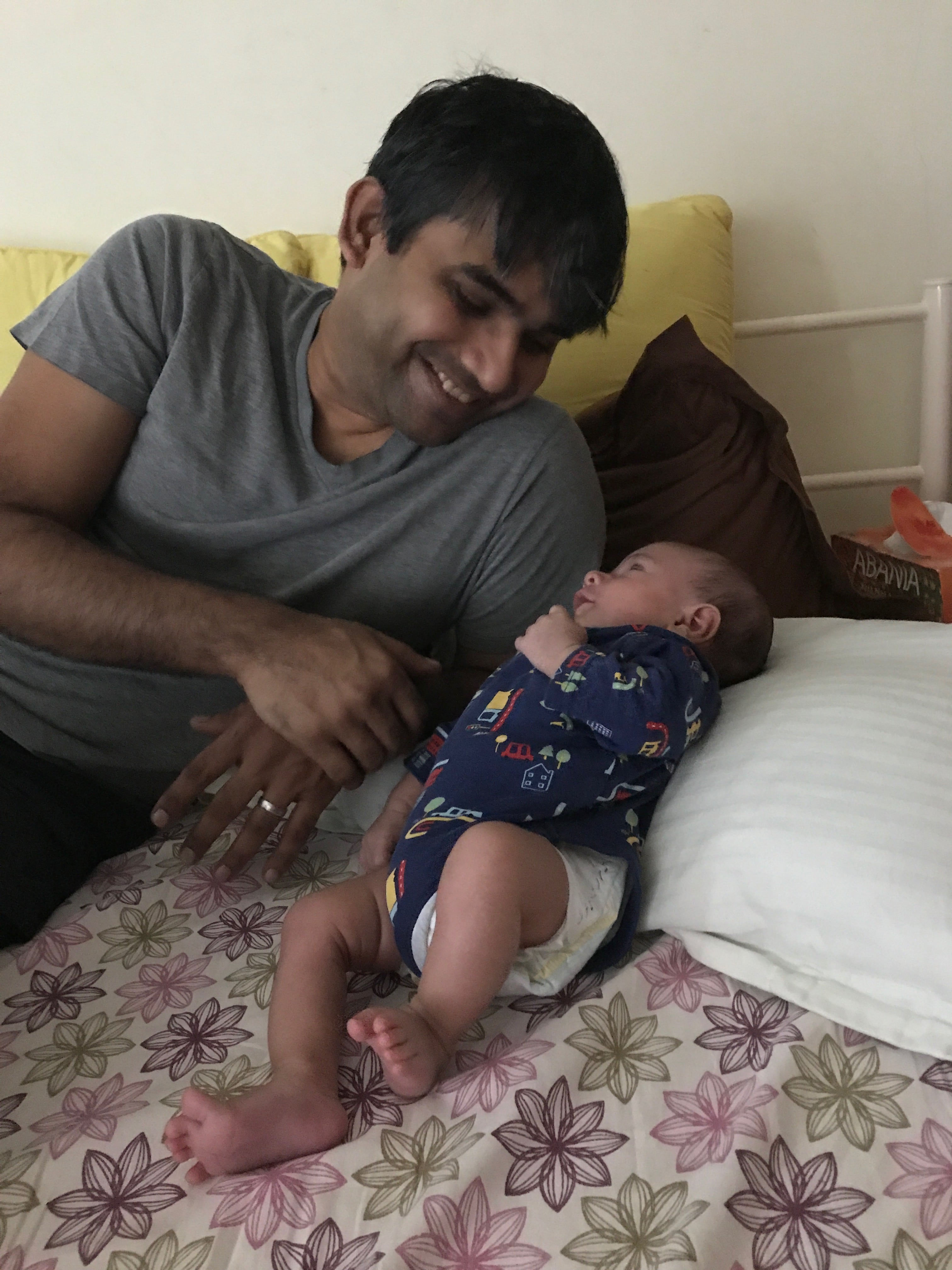
We are doing well and baby is healthy. Past month with the newborn baby was exhausting and deeply satisfying at the same time. sharing a recent photo with you all:-)

naren and baby
father son time

Doctor Consultation: Total Cost INR 8,400

Our Ob-Gyn’s ( Obstetrician- Gynecologist) consultation charges were Rs.500/visit. We visited him in 2-week and 4-week intervals for the first 8 months and every week after that.

Scans and Tests: Total Cost INR 13,365

Other than pregnancy-related scans and blood tests, I had to get monthly thyroid tests done, which costed 750 bucks each time – this is an exception and not a regular pregnancy expense.

Medicines (mostly supplements): Total Cost INR 11,622

Most of the medicines during pregnancy were supplements such as Vitamins, folic acid, calcium and iron. These supplements are taken for entire 9 months and some continues later as well.

Other Optional expenses: Total Cost INR 53,527

  • Ayurvedic Consultation & supplements:  We took Ayurvedic Consultation & supplements for the entire duration of pregnancy. Weekly cost of the consultation and supplements was Rs 900. We were guided by our doctor on a fortnightly basis on what to eat. We also went to him for minor pregnancy issues such as constipation, back pain etc  and the total cost for this over the entire pregnancy was 36,000 RsWe believe in Ayurveda, it was not something necessary but something we wanted to do. 
  • Maternity Clothes: I got a few hand-me-downs from a dear friend so I did not need to spend much on maternity clothes. Total spend was 8,426 Rs.
  • Dry Fruits: 🙂 You will be surprised how expensive that can be when you are eating a bunch of them every day. Our Ayurvedic doc had recommended eating a mix of soaked almonds, figs, apricots, raisins, walnut. I could only eat it for 5 months and then I just could not bring myself to eat them. The total cost for 5 months of dry-fruits was 9,101 Rs.

Total Cost of Pregnancy and Delivery

Excluding the optional expenses on Ayurveda, Maternity Clothes and Dry Fruits we spent roughly 1.5 lakhs during Pregnancy and on the Delivery.

A note on Maternity Cover via Health Insurance:

We did not opt for the Maternity Cover add-on offered by our Health Insurance. This was because there was a 3-year waiting period to become eligible. Since we were already in our 30s when we got married we assumed that we would have kids soon and waiting for 3 years to have kids was not the plan. As it turned out we had our kid 4 years after marriage 🙂 as we did not feel ready until then.

We did a quick back-of-the-envelope calculation and found that even if we had paid Rs.10,000 extra in annual premium for the maternity cover for 3 years costing a total of Rs.30,000 in extra premiums we would have still saved Rs.20,000 since the Cesarean was covered upto Rs.50,000. You can do your own math to see if Maternity Cover makes sense for you. While thinking about waiting periods don’t forget to include the 9 months of pregnancy 🙂 So the waiting period is technically only 2 years and 3 months!  Also this maternity cover allows upto 2 pregnancies so it may make sense if you are planning to have a second kid in quick succession.

Maternity Cover.png

Source

ENJOYED READING THIS BLOG POST ?

Subscribe by E-mail for more awesome information on Early retirement, personal finance and our life in Goa!!. We publish one new post every week!!! Its Free!

Show your love on social media:

If you like our blog posts! please do LIKE and SHARE it on facebook, twitter or whatsapp!

Little off-topic, We recently watched trailer of @PlayWithFIRECo- A documentary featuring 30 F.I.R.E Couple in the USA. Though it is made in US but story is true to INDIA as well:-) It bought so many bitter sweet memories of our own journey. it will be very exciting to watch real people talk about their personal journeys on screen when it is released. For now sharing the trailer-

Why having kids before age 30 makes sense

0

Most of our readers are already parents. We are writing this more for future young readers both married & single who are delaying having kids as they may not feel ready yet. Our biggest learning from becoming new parents is that if you know you want to have kids someday, it is advisable to get started sooner than later as Mother Nature is not kind to couples in their 30s. Since more and more couples are getting married late or deciding to have kids in their 30s we want to share the most important lesson we learned.

When we were single in our late 20s and early 30s, parents and peers gave unsolicited advice or explicit nudges to get married soon as we were headed past the child-bearing age. When one is not settled in a career, unsure of what we want to do with our lives, drowning in loans and most importantly not yet found the right person to marry, the last thing on your mind is becoming a parent. When you are spending late nights at the office or relaxing with friends on weekends you can be lulled into a false sense of comfort there is a lot of time left to have kids eventually. All you have to do is have sex after marriage, correct? WRONG!

Naren with our son

Naren is 37 and Sugandha is a couple of years younger:-). If we had found each other sooner, we would have probably had our child much earlier. Having a child was always at the back of our minds since getting married but we did not feel ready to be parents until last year because we had recently made too many big moves. Only when we actively tried to conceive a child did it finally dawn on us that conceiving was just the first of many hurdles you have to cross to bring a child into the world. Literally every step of becoming a parent from conception to pregnancy to delivery is fraught with risks and it feels like nothing is under one’s control. You just had to do your thing and trust the universe for a positive outcome.

You would not understand this feeling of helplessness until you and your spouse are anxiously peering over a home pregnancy kit waiting for the right colour to confirm the pregnancy. This might be news to a lot of youngsters out there particularly the men :  There is only a 10-day window each month where you can try to conceive. If you don’t conceive within those 10 days then you have to wait and try again the next month until the kit turns the right colour.  Conceiving is not a straightforward matter of being fertile and having sex. There could be many reasons why the sperm is unable to fertilise the egg. There could be health issues in either of you preventing a conception. This is the most excruciating part of trying to have a kid.

Naren with our son on beach

The task is not done once you conceive for there are other hurdles to cross for a viable pregnancy. We had heard of heartrending sadness that happened to people at this early stage. So we were too scared to even share the news outside of family for the first 4-5 months until the baby bump became obvious. Closer to the delivery date there were other considerations like natural birth or C-section.

We were extremely lucky that our late age did not affect our ability to have a child. If we had known the multiple risks and hurdles involved in having a baby we would have started the process much earlier. Because if there are problems at any stage like conceiving or pregnancy or delivery you need to start all over again. It is like a real-life game of snakes and ladders. It is emotionally hard on the couple not to mention the negative effects it could have on the marriage itself. Trying for a kid early in your 20s allows you at-least the time to take corrective action in case of any fertility issues or pregnancy complications. In your 30s you have very little time left to take corrective action as the fertility of both the man and woman start decreasing rapidly after age 30 making it harder to have a child.

I’ve put together a hypothetical timeline below to show how the window to have a kid is very short in these modern times:

  • Age 21 : finish college.
  • Age 22:  start working at a job
  • Age 24:  marry 2 years after settling in job
  • Age 26 : take 2 years to settle in marriage before having a kid
  • Age 27:  conceive
  • Age 28:  delivery after 9 months

Now age 28 is physically a good age to have a kid as you still have youthful energy to take care of the physical demands of parenting. Additionally your parents are also not very old and in good health so they can help you out easily with the newborn baby after delivery.

Imagine if this “ideal” schedule gets disrupted by just 2 years due to various reasons like:

  • breakup with person you are dating or married
  • getting a second 2-year degree like MBA
  • difficulty conceiving a child

This pushes the age of conception from 28 to 30 already, the age when the biological clock for both men and women starts running out of time. Now we understand why our parents wanted us to get married early and have kids early.

We don’t know the answer to having a rewarding career, finding the right person and having kids all before you turn 30. All we know is we would have been deeply unhappy if we had a great career but without a kid in the picture. Making a serious effort to find the right supportive person to marry early in your 20s will definitely help. The financial insecurity you may feel at the start of your career can be eased by following the high savings mantra of the F.I.R.E movement.  It is a deeply personal decision so we are simply laying out the facts above so you can decide for yourself.

P.S: Pattu from freefincal has also written his personal story about having their kid through IVF. It is a must-read if you are serious about starting a family.

ENJOYED READING THIS BLOG POST ?

Subscribe by E-mail for more awesome information on Early retirement, personal finance and our life in Goa!!. We publish one new post every week!!! Its Free!

Show your love on social media:

If you like our blog posts! please do LIKE and SHARE it on facebook, twitter or whatsapp!
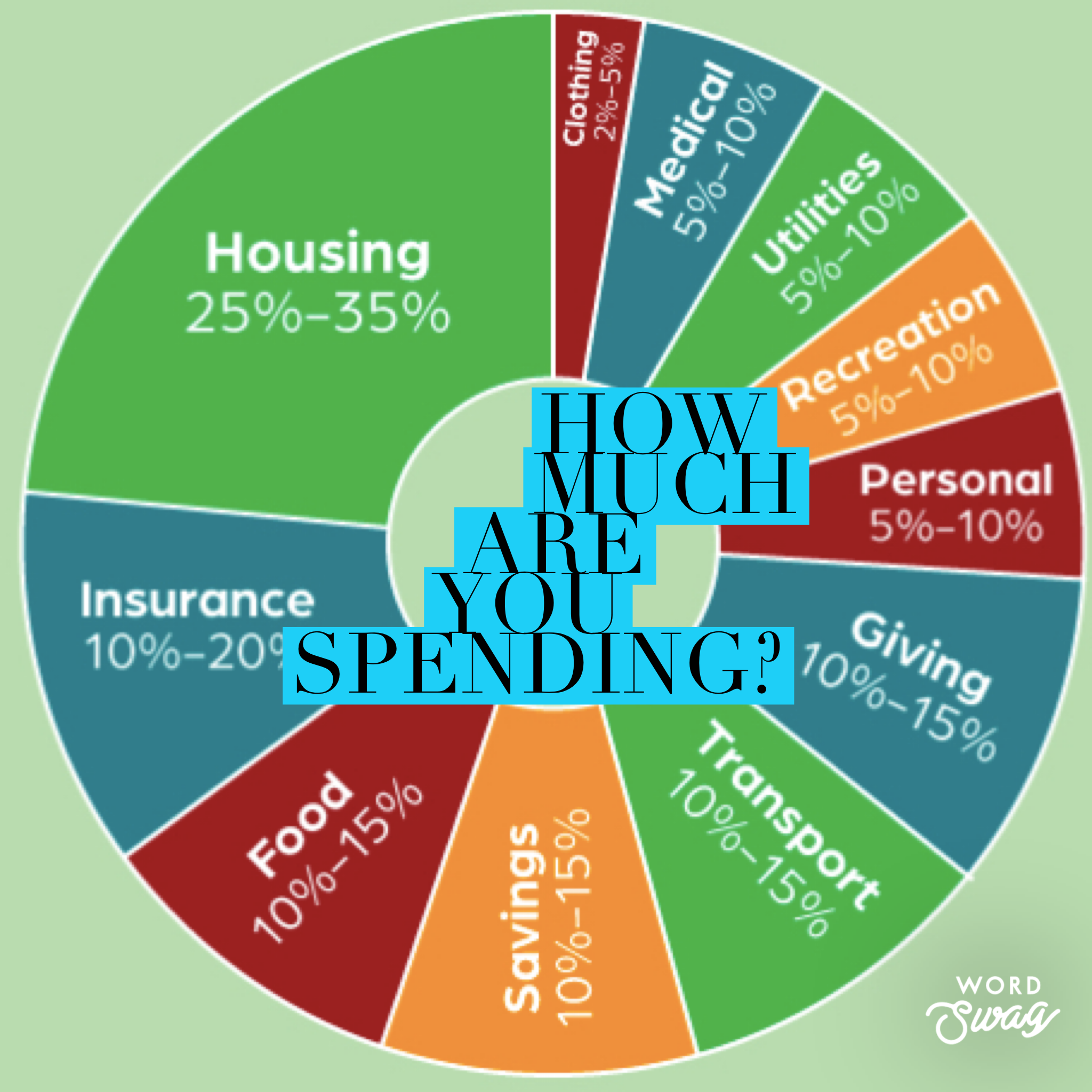
We are parents!

22

Our Little Baby Boy has just arrived!

So small and precious too…

We just couldn’t wait to share our happy news with you!

– Sugandha & Naren

Baby birth announcement

Want to Retire Early to Travel the World?

1

Some of us dream of traveling the world after retiring early but are apprehensive that just banking on retirement corpus may not be enough when you want to travel the world. Traveling is an expensive affair!

Naren and I also have such a dream!!! We are into slow travel- we dream of living in different countries around the globe for extended periods of time (at-least 5 different countries in our lifetime). We started with Goa- as it keeps us close to our families and gives us home advantage while we strengthen our financial position. In the future we are tempted to move our base to other Asian countries first and then maybe Europe 🙂

A while back I was asked on Quora what can one do to retire early and travel the world and this blog post is inspired by that question. In addition to building a retirement corpus our strategy to travel the world is by building a skill that can generate income by working from remote places and having some passive income.

As you know by now we ourselves are Digital Nomads living in Goa now for last 4 years. We have created flexibility for ourselves to work from anywhere in the world. But we still have to work on optimising some other ways that will allow us to travel and live in different countries.

If you have a similar dream and goal, read on:

1.Figure out your target retirement corpus that accounts for traveling the world:

Retiring early to live in your country is very different from retiring to travel or live in other countries. So to figure out how much money you need to retire and travel do some research and estimate the costs of travel to places you want to cover and average living costs in those countries. You do not have to be exact, do a rough calculation. One blog that will help you with this is Go Curry Cracker! – Retire Early. Travel the World. This couple retired in their 30’s and since then have travelled the world with their Kid.

They wrote a blog post on Costs of 4 months in Europe. Below is the snapshot of their total costs- which comes to ~ 19.4 lacs (@1 USD = 67 INR, in 2016). They optimise a hell lot while traveling… It is very reasonable for a family of 3 to cover 10 countries:

Roughly speaking, we spent a month each in Spain, Italy, and the UK / Ireland, and a week or less in the Netherlands, Portugal, Czech, Germany, Denmark, and Iceland; 10 countries in total.

Go curry cracker

cost-of-4-months-in-europe

Once you have figured the approximate costs of travel to places you want to go to, especially in first few years after early retirement  you will have more clear goal and confidence to s

2. Learn how to generate passive income:

The key to retiring early and travel is to create a stream of passive income that will keep generating sufficient cash to cover your monthly expenses partly/ fully while you travel. There are various ways to generate stream of passive income, few examples are:

  • Investing in rent generating real estate.
  • Building a business that can generate income with little or no work- eg some people travel and blog/ vlog about their travel, which generates income. One such Indian success stories is Travel and Photography Website. You can also freelance for travel magazines or websites etc. If travel is your passion all this may not even seem like a work to you.
  • Airbnb your place or room at your house while you are travelling
  • Become a silent partner in a business- Build a side business where you can become  a silent partner in exchange of passive income once you retire to travel.

These are only few example, but some solid ones, start exploring these and see what suits your temperament.

We Personally have a mix of  the following in our portfolio:

(1) have rent generating real-estate

(2) we have a blog that you are reading :-),

(3) we had an opportunity to invest our time in the past for a very small stake in a company.

2 & 3 are are not generating income at the moment, but we are hopeful in future some money will trickle from these endeavours. hey! remember every rupee counts.

We continue to keep looking for more such opportunities.

You become financially free when your passive income exceeds your expenses

3. Learn to hack travel miles, hotel reward points through credit cards

Again a ton of money can be saved if you learn to use travel rewards program, airlines credit cards to earn free miles and free hotel nights.

We exchanged our old citi credit card for Citi Premiermiles credit card this year, and have ~19,000 miles (10,000 miles were kind of starting bonus, 7,000 miles were rolled over from old credit card, ~ 2000 miles were earned in last three months). We pay annual membership of INR 3000 for this cards and have other benefits and perks as a card holder.

What will ~19000 miles get us? One person’s round-trip to our home town from Goa (Delhi/ Chennai). We are expecting that in a year we will have enough points to cover one round-trip for our family to visit our parents.

We have also optimised travel by staying in Airbnb, it brings down food costs considerably if you have access to kitchen in your airbnb.

We have yet to try hotel credit cards/ reward program. But it is something we will try when we start travelling. If you have other ways to hack travel, do share them in comments.

4. Pick up skills to become a digital Nomad

Digital nomads are a type of people who use telecommunications technologies to earn a living and, more generally, conduct their life in a nomadic manner. Such workers often work remotely from foreign countries, coffee shops, public libraries, co-working spaces, or recreational vehicles. This is often accomplished through the use of devices that have wireless Internet capabilities such as smartphones or mobile hotspots. Successful digital nomads typically have a financial cushion. The digital nomad community has had various events established to host members of it, such as the Nomad Cruise. Digital nomads may vary depending on status; common types of digital nomads include refugees, affluent people, younger people, and entrepreneurs. People who become digital nomads often do so due to positive reasons, such as financial independence and a career that allows for location independence Wikipedia

Naren is a software engineer, so for people like him sky is the limit but others like me without technical computer skills also have ample opportunities There are lots of online businesses that you can manage while traveling the world- like starting a blog or youtube channel, a online course about something you are passionate for, or an online store selling on Etsy or other e-commerce platforms.

Affiliate marketing is another avenue. When you travel you will experience wide range of services and products most of them will have some sort of affiliate or referral program. You can make money by referring the services you like on a blog.

These are few things if you start working on can help you turn your dream of traveling the world into reality. That is our endeavour at least.

If you know some more ways that can help us and other fellow readers please share them in comments. We love to hear from you!

OTHER POSTS TO READ:

How much money I need to Retire Early In India

Safe Withdrawal Rate- How long will your money last in retirement

Featured in Mumbai Mirror for How To Retire at 40

Our Top 10 Financial Mistakes #FacePalm

Our FIRE Journey Year Zero

16

This September, It is 4 years since we made the big Move- or so many big moves- Started our journey towards F.I.R.E, got married, became digital nomads. I quit my job and we made Goa our home.

We did so much in the last 4 years, today we both feel like very different people and we can’t stop but share this journey with you as best as our memory allows 🙂 You may be surprised by the fact that till 4 years back  our life plans were totally fluid. Naren had introduced me to MMM but we had not started our FIRE journey yet. We were poles apart in our spending habits and views on personal finances.

These past 4 years were nothing short of a roller-coaster ride that we enjoyed thoroughly, as we learned a lot about ourselves, about each other and these 4 years have been the best teacher to us.

Also we are guilty as charged for writing lengthy blog posts with lots of math, so here is some fun and light reading 🙂 We will share the past 4 years journey in 4 parts. This is a photo-heavy post, please bear if due to a slow internet connection they take a bit more time to load.

TABLE OF CONTENT

2014, YEAR ZERO: Year of Big Changes, Contemplation and Travel

Mid 2014. By this time Naren had returned from US after working there for a decade and had started multiple projects and was working remotely. I was on 3 months sabbatical from work- living in a small village in the hills of Himachal Pradesh, taking part in an intensive yoga course. I have some great memories of that time- those months were filled with beautiful scenery, leisurely walks, great food, 4 hours of yoga every day, reading and enjoying my new-found freedom from work. (Illustration by Sugandha:-))

Sugandha leaving for holidaySugandha on the way

Sugandha Reached the destination
Small village we were staying in

Sugandha enjoying Dharamkot
Picturesque walk to the yogashalla

Sugandha doing Yoga
Learned to do headstands, handstands

Sugandha reading during holiday
One of our fav spot to sit and read

We would sit for hours in cafes in this small village and talk about the kind of life we both wanted and how to make it possible- at this point we had made a very rudimentary excel sheet with all our assets and our monthly expenses.

Sugandha & Naren hangout sopt
View From one of the cafe’s we use to visit

Big Decision No:1- Sugandha to continue the Job or to Quit?

The next big decision we had to make at this point was whether I would go back to work after sabbatical or quit my job?

Lot of people wonder why I quit my job at such a young age, It was not an easy call since it was the best job I had in my whole working career. The thing is I do not like to do things half-heartedly. So once I felt that a corporate career and hectic life were not what I wanted for myself for the rest of my life, I started thinking of alternatives. While I did not have a straight-forward answer back then, I knew I won’t find one sitting in my office. So I took a leap of faith to explore the unknown. Fortunately I had a financial safety net to fall back on and I thought even if I failed I will again start from scratch. It is easy to be optimistic when you are 29 :-). Looking back I can see the risks involved with taking such a drastic step. Things could have gone either ways.

At 33, I am glad I took that step that early on because I don’t have the courage or energy to take such a drastic, risky step at this stage in my life. Now I want a more settled and predictable life that we are building for ourselves.

I was still only half way through my sabbatical so we decided to tick off one item of our bucket list- A road trip to Leh, Ladakh via Manali.

Road Trip to Leh and Ladhak

The road trip took us two days from Manali to reach Leh Ladhak. We camped by the river the first night. The whole time we were simply in awe of the scenery- you have to see it to believe it. But the roads were not that good and the two day journey was not very comfortable. But what the heck! we were too excited to let that affect us.

En-rute Leh & LadhakEn-rute Leh & Ladhak

The region is a high altitude cold desert, because of the Himalayan range on one side which does not allow monsoon clouds to enter the region

Monastery at Leh

Pangong Lake
Pangong Lake

En-rute Leh & Ladhak
Leh

Naren & Sugandha at Pangong Lake
Pangong Lake

We ended this trip in awe of beauty of this region.

Back to Delhi Via Kashmir

On the way back  to Delhi we made a de-tour via’ Kashmir. Leh to kashmir  by road is overnight journey with fantastic roads. I remember we reached Kashmir on 14th August. I had never ever seen so much military personnel walking on the roads. Later we got to know that because of Independence day they were on extra vigil. The Upside was we had Dal Lake to ourselves.

Boat ride at Dal Lake KashmirBoat ride at Dal Lake Kashmir

We flew back from Kashmir to our concrete jungle for couple of days.

Sugandha back at home

After we came back, I decided to quit my job. I met my boss and colleagues and informed them of my decision- I got a mixed reaction. They had already given me a 3 months sabbatical to think over it (Very generous of them, they are without doubt one of the most talented people I worked with), so we were able to wrap up things pretty quickly.

Big decision 2- Where to live?

Next big decision we had to make was where to live since both of us were now location independent? At this stage both of us were like free birds, ready to fly! we were so excited about the possibilities. We were keen to stay in the hills but decided against it because of geographic isolation and infrastructure. Both of us required high speed internet. After a lot of research and eliminating places we had a winner in Goa. We decided to take a trip to Goa to check it out.

Recci Trip to Goa

I had been to Goa once before and for Naren it was the first time. We had already shortlisted 5-6 villages in Goa via internet research that we wanted to check out Aldona, Parra, Assagao, Benaulim, Moira and one or two in South Goa that I do not remember now. We started with staying in an AirBNB in Aldona- One of the most picturesque, idyllic villages in North Goa.

We explored Goa for a month, stayed in south as well as north Goa to get the vibe of the place. Ultimately we zeroed down to where we began- we decided to stay in Aldona.

Aldona Village
Aldona Village

Aldona Church
Aldona Church

Our House in Aldona
Our House in Aldona

We finalized the house lease and felt a big burden lift from our head. It was a cute 2 bedroom brand new duplex, semi-furnished. We got a good deal on rent for 14,000/month!!!!

Few days later we joined our friends in Jodhpur for Rajasthan International Folk Festival (RIFF).

Goa to Jodhpur

RIFF is an annual festival organized to promote traditional folk music and arts held at Jodhpur in October. It was my second time attending this music festival. This 5 day event is a total immersion into music and arts. Artists gather from all over india and the world and play from dusk to dawn at multiple music venues in and around Mehrangarh Fort.

In my opinion it is the most well organized music festival that I have ever been to in India. The crowd is great and the facilities are managed well. But for some reason I could not find our pictures of this event, so I am using some from the internet that represent my experience of RIFF.

rajasthan-international-folk-festival

Jodhpur RIFF

Source

Jodhpur Riff

We enjoyed ourselves a lot and I also used this opportunity to shop for my wedding dress from Jodhpur. After this we went home to do prep for our wedding.

Biggest Event of the Year

November, 2014: The year zero was concluded with a big bang- Our Wedding! We both wanted a very simple wedding but our parents could not contain themselves and went full out. Thank you Mom and Dad 🙂

Sugandha & Naren's wedding Invitation

We celebrated this new beginning with our family and friends and felt very lucky to be where we were in our lives.

Naren and Sugandha Sangeet Function

Fun fact: Naren is from Chennai and does fantastic bhangra. He floored the North Indian Side of the family with this one performance.

Naren and Sugandha Wedding Function

Naren and Sugandha Wedding Ceremony

By the end of year Zero few key things were clear to us

  1. We wanted to live a quiet life outside of metros– We both love quiet, greenery, long walks in nature- which is not possible on a daily basis in a big city.
  2. We both wanted autonomy– We both enjoy work but do not enjoy 10-12 hours work days or stressful work environments. We both felt a need to do something meaningful to us, something more than a job,  and to create a balanced life, where work is important but not over and above our personal and family life.
  3. We were ready to downsize our lifestyle– We lived these 3-4 months with one backpack each (including winter gear) and we did not miss a thing. We got a lot more confidence in experimenting with a more frugal lifestyle as we tried to land back on our feet.
  4. We found our answer in F.I.R.E- We realized that if we want to experiment with our life and keep our freedom, FIRE is a way to go. Both of us were convinced more than ever to make F.I.R.E work for us so that we can have the lifestyle we want forever. So, debt free, with 7 years worth of expenses saved, and a 2 BHK apartment to our name we decided to give it our all to this experiment and see where it takes us.

Our expenses in year zero: year 2014

We both were very aware that we do not have monthly pay-check anymore, so wherever possible we tried to be frugal. But we had fair bit of expenses on travel and setting up house in Goa

Unfortunately we started using Spendee and tracking our expenses from August, 2014 so we only have record of last 5 months. During this period we spent total of 4 lacs .  Below is the snapshot of breakup from our app.

As you can biggest spending was on flight, hotel stay, one-time house set-up, cabs and eating out.

Isn’t it awesome to go back and see where you money goes!


Spandee app expenditure screenshot

We will share what happened in next three years- our mistakes, learnings and fun things too in 3 separate blog posts over next few months!

If you want to know any more specifics feel free to ask us in comments and feel free to share this blog post with your friends and family.


Our Top 10 Financial Mistakes #FacePalm

11

We believe mistakes are the stepping stones to wisdom. So we try not to mull over too much over our past mistakes, however we try not to repeat them. We also believe it is even better to learn from the mistakes of others. So with that intent in this blog post we are sharing with you our top financial mistakes.

Experience is simply the name we give our mistakes. – Oscar Wilde

TOP 10 MISTAKES:

MISTAKE NO.10: KEPT A LOT OF MONEY IN SAVINGS ACCOUNT

Both of us are guilty of starting our personal finance journey late. We both were focused on making more money than to save and invest it.  In early years of our career we both kept substantial amounts of money in savings account rather then investing it towards a future goal. Funny part is we even did not put it in FDs.

MISTAKE NO. 9: INVESTED IN ULIPs FOR TAX SAVINGS

Sugandha: Once I reached 30% tax bracket, someone suggested ULIP as a tax saving and investment instrument. Without thinking much I invested in 4 different ULIPs with lock-in of 3-5 years. Later on when I evaluated my portfolio holistically I realised all four ULIPs put together were offering me low life cover as well as low return on my investments.

I ended up discontinuing two out of 4 ULIPs and lost 60K that I had already paid in the instalments.

MISTAKE NO. 8: NOT TAKING LIFE INSURANCE/CREDIT CARD BEFORE QUITTING MY JOB

Naren: I moved back to India to start my own business. A year and a half later, just after getting married I applied for life insurance but my application was denied. Turns out life insurance is given only based on multiples of current income (15x, 25x etc)  since the rest of the assets are assumed to go to the nominee anyway. My business income was not even a fraction of my old salary at that stage and so I did not get a decent life cover. I had to wait for 3 years for my business income to increase before qualifying for life insurance by which time the premium had increased a lot due to my age.

Similarly my wife had a credit card she had acquired while still at her job so she had a decent credit limit based on her past salary which we could use for emergencies.

My advice to anyone quitting after FIRE or before is to make sure to leverage your job salary to sort out issues like life insurance, credit cards etc. which depend on “current income” to qualify.

MISTAKE NO. 7: GOT MULTIPLE CREDIT CARDS RIGHT OUT OF COLLEGE

CREDIT CARD DEBT

Source

Naren: When I went to the U.S for my post-graduation,  I found credit card companies had set up stalls right on the college campus to give credit cards to students like us with no credit history.  Best of all they gave it away for 0% interest rate for the first year or two. Our seniors warned us to be disciplined about paying off the bill every month. Boy! how I wish I had listened. With a low salary at my first job and a student loan to pay off, I started racking up credit card debt for discretionary expenses. Once the 0% interest rate offer ended, I would “roll-over” the debt from the first card into another card offering 0% interest rate for another year kicking the can down the road. At one point I probably had 10 different credit cards! Finally the music stopped and I was under a lot of credit card debt which took me years to pay off. I get shivers just remembering how stupid I was. Today I have only 1 credit card which I pay off in full every month no matter how big the amount 🙂

MISTAKE NO. 6: DID NOT PAY OFF MY EDUCATION LOAN PROMPTLY

YOUR FRIENDS MIGHT LOOK AT YOU AND LAUGH FOR GETTING OUT OF DEBT. THE GOAL IS NOT ACCEPTANCE, IT'S FINANCIAL INDEPENDENCE, (2)

Naren: While I was enjoying my initial years after college fuelled by my credit card spending, I got a call from my Father one day asking “When do you plan to start repaying your student loan? Our house is on collateral with the bank and we’ll get it back only if you finish paying off the loan. My monthly pension amount is being deducted towards your education loan interest”. That was a wake-up call.

Turns out I was not even aware that you need to start repaying the loan six months after getting a job. Meanwhile interest was compounding on the student loan. My already retired parents had been  paying the interest while I was in college so I would not be burdened with a big loan amount upon graduation. But now that I had a job they wanted to get back both their pension and house given as collateral to the bank.

That phone call from my Father was a big turning point in my financial life as I started to cut down expenses drastically to pay down both my student loan and credit card debt. I sold my car, moved closer to work, started using public transport, downsized from renting an apartment to sharing a house with 4 room-mates, started cooking at home etc to finish paying off my education loan within the next 3 years. Soon after I paid off my student loan and credit card debt, I felt free to quit my corporate job and take the risk of joining a startup.

MISTAKE NO. 5: NOT BUILDING AN EMERGENCY FUND AND STRESSING ABOUT JOB LOSS

Naren: Since I was drowning in debt that required a constant pay-check to service, I was constantly afraid of losing my job. I was sure that if there was a layoff I would be the first to be axed. Looking back I’m surprised at myself because I was always an above-average performer. So this fear of job loss was just blind fear based on office gossip.

The right thing to do would have been to put in a safety net to address the legitimate possibility of job loss. Simply saving up 6 months to 1 year of expenses as safety net would have dispelled this fear since I could always find another job in 6 months or 1 year max. But because I had so much debt, I did not have any savings left to build a safety net. Because I was always fearful of losing my job, I did not take even basic professional risks that would have increased my salary. A classic case of financial mistakes causing one to dig a hole and bury one’s career. Yikes! just shows how financial mistakes also have a ripple effect on other parts of your life.

MISTAKE NO. 4: WITHDRAWING MONEY DURING MARKET CRASH WITHOUT UNDERSTANDING INVESTING

Naren: Year 2008. The financial crisis reduced my IRA (U.S version of India’s P.F) to 50% of its value overnight. I had just started working at a startup and had no emergency fund other than my retirement fund.  Driven by my usual fear of job loss,  I withdrew the entire amount from the stock market and left it sitting as cash in my retirement account  for the next 3-4 years.

I did not even listen to the advice of my street-smart best friend who advised me to counter-intuitively invest more money in the market since everything was so cheap. The market not only recovered in those 3-4 years I was sitting on the sidelines but went on to become a bull run. This meant that my retirement corpus lost all that compounding and earning potential.

Irony was my 1st corporate job was in Wall Street but I never understood personal finance in my own life! Instead I aggressively invested savings from my salary to buy an apartment in India. That did not turn out well as I’ve written in detail previously 🙂

MISTAKE NO. 3: DID NOT START GOAL-BASED PLANNING TILL IN OUR 30s

We both spent 10 years of our career earning without clear financial goals in our mind. The most we thought of was the expenses we had to incur in the current year. This led to lot of wastage on discretionary spending- clothes, eating out, partying etc.. and poor investment choices.

Once we started Goal-based planning we realised how amazing it is to put a clear goal towards our desires and dreams. Goal-based Financial planning helped us prioritise what is most important to us and how we can secure that first. Once we started prioritising, the things we thought were impossible became possible (such as achieving FIRE) . It also helped us eliminate things which do not fit into our lifestyle and simplified our life.

THE GOAL ISN'T MORE MONEY. THE GOAL IS TO LIVE LIFE ON YOUR TERMS


MISTAKE NO. 2: BELIEVING A START-UP WILL MAKE ME RICH

Naren: One of the reasons why I had such poor financial habits was because I was bitten by the startup bug since college. I thought that one “win” from a startup would be enough to “set me for life” and I could retire early.

So I did not believe in saving steadily via SIP and letting it compound over time. Compounding happens so silently for the first 10-15 years that people with short-term focus will not understand it because its true power explodes only after 15-20 years. There was a lot of glamour associated with working at a startup because of this “lottery potential” even though there wasn’t the usual career progression or high corporate salaries/perks.

In my case, we did not win the lottery. In retrospect, I picked up a lot of valuable skills that helped me start my own business. The salary from the startup helped me buy an apartment without taking a loan. I made connections who went on to become my business advisors/partners. Did it make me rich? No. But did it make me wealthy in experience? Yes.

MISTAKE NO. 1: BOOKED UNDER-CONSTRUCTION APARTMENT AT AGE 27

This one was so bad that I wrote an entire blog post about it 🙂 The Short Story: The apartment I booked in 2008 for Rs.3000/sq.ft is now going for Rs.4500/sq.ft in 2018 ten years later. A grand CAGR of 4% for a 10-year investment.

CONCLUSION:

Simply reading all the above mistakes makes us groan in horror & facepalm. We are amazed that we even have savings haha 😉 Even after making all these mistakes we are on track to retire early by 45.

Now imagine someone who does not make these mistakes: they can easily retire early by age 35 if they wanted.

Did you make mistakes you can’t get over? share them with us in the comments.


Featured in Mumbai Mirror for How To Retire at 40

6

Last Monday Mumbai Mirror did a story on Early Retirement- How to retire at 40, it featured three Indian families, we were one of them. The article has a good perspective of a mid-40s person who walked away from a successful corporate career to pursue his passion of writing. We are in our mid-30’s not retired fully but pursuing F.I.R.E while also doing what we like to do and living a semi-FIRE lifestyle. In this blog post we will share that article, it is an interesting read. We will also share 6-Steps To Kick Start Your Early Retirement Journey, in case you have not started already.

Please remember it is a process, a long one that too. But do not get intimidated. Remember.

“Journey of a thousand miles begins with a single step”-Lao Tzu

Take that step today!

Table of content

Mumbai Mirror Article- How to retire at 40

Here is a snapshot of the article. Full article is at the end of the blog post.

Retire at 40 Mumbai Mirror Article featuring Naren & Sugandha

It is always difficult to condense how to retire Early for a short article like this, but we think it covers some of the most important pointers for anyone who is just starting out or wants to start out.

We received  couple of e-mails from the readers of Mumbai Mirror and we were very happy to see that there are so many people who are interested in Early Retirement. But for some reason a lot of readers shared that they are unable to take the first step towards their Early Retirement Journey.

So, for all the old and new readers if you are inspired by FIRE and want to retire early, but are not able to start the journey. Here are few key steps you can take to get started:

6-STEPS TO KICK START YOUR EARLY RETIREMENT JOURNEY:

STEP 1. Write down how Early retirement will improve your life

If you need some more external inspiration- read our blog post Early Retirement is the necessity these days,  Top 5 reasons to be financially Independent and Retire early. We have a another post that addresses how to come out of unhappy work environment – Unhappy at work- Get your life back using Early Retirement that you may find useful.

STEP 2. Share your Early Retirement Dream with your family and get them onboard

Do not get discouraged if your family does not come on-board immediately, share your ideas, lead by example and give them time to come around. We have a blog post on How to convince your partner about Early Retirement that you may find useful while talking to your partner and family.

STEP 3 Calculate your Net Worth

Make a list of all your assets- House, Car, Investments, savings, gold etc and deduct all the liabilities (ie. all outstanding debt) from it and you will get your Net Worth. Use this number to track your progress every year. If you are wondering why is it important?

“If you can’t measure it, you can’t improve it.”- Peter Drucker

STEP 4. Figure out your monthly Expenses- see wherever you are wasteful and make cuts

There are some great tools that help you to track your expenses. We have been using a free phone app called Spendee to track and control our monthly expenses. We have also written a blog post Track Spending to Find Saving  that you may find useful. Some of the readers highly recommend another phone app walnut and perfios ,a much more comprehensive money management tool. Check them out and use them to track your monthly expenses.

It is amazing to see how tracking expenses for a year or more gives you deep insight into your spending habit and helps you save money on wasteful spending. We have been tracking our expenses for over 4 years and we can see our family’s spending habits and also our family’s year-over-year inflation.

STEP 5. Make a plan to clear out your debt and say NO to new debt

We have written a blog post on How to Pay off your Student Loan in the Shortest Time possible but it is applicable to all sorts of debt. Read it and you may find it very useful in reducing your debt. If you are an impulsive buyer, who maxes out their credit cards every month and pays only the minimum due please read Simple trick to save more money : Use Cash!

STEP 6. Create an achievable goal for monthly savings towards your early retirement

Set a monthly saving rate that works for you. We recommend saving at-least 50% of your income if you are targeting Early retirement. If that is not possible immediately start with what you can and slowly and steadily increase your saving rate.

reason behind the 50% savings rate
Why 50% Saving Rate?


Remember the great Hindi saying of Kabir,  start right away- no better day than Today!!!

“KAL KARE SO AAJ KAR, AAJ KARE SO AAB, PAL MEIN PARLAI HOEGI, BAHURI KAREGA KAB”

Mumbai Mirror- How to retire at 40 Complete article

Snapshot of Mumbai Mirror Article Featuring Sugandha & Naren Snapshot of Mumbai Mirror Article Featuring Sugandha & NarenFor online version, click here

Early Retirement Interview: Mahesh is 5 years away from claiming Early Retirement

17

Second in the series of Early Retirement success stories we have Mahesh an IT professional from Pune who shares his FIRE journey with us. Mahesh is 5 years from achieving his FIRE Goal. He is a a fine example of someone whose investment style is conservative and has relatively less exposure into Equity investments. He has used real-estate and other debt instruments to create major chunk of his retirement corpus.

Thank you Mahesh for sharing your journey candidly with all of us at Saving Habit (SH).

Q&A 

Q1 SH: Tell us a little about yourself 

MAHESH: To provide a quick introduction I am a typical IT professional who is now in middle management, shy of the milestone age of 40. Both my wife and I work though she is at a junior level due to a 5 year gap in service.

We have 2 kids and are currently located in Pune. Similar to Anil, thankfully we don’t have any other responsibilities like care of parents or in-laws. We are a God fearing, manage your own thing kind of a family. I don’t get influenced by the bling all around me on social network.

Q2 SH: How did you get into F.I.R.E(financial independence/retire early)?

MAHESH: I guess I got into the early retirement planning since the age of 31 after my return from onsite. I decided to purchase a house after that and had a huge loan on my head (More than 60% of my take home at that time). It was kind of adventurous on my side to take that kind of a risk since I already had a debt free house. My second kid was soon born and I realized that I am too much dependent on my job and if God forbid anything goes wrong my entire family will be impacted and I will be solely responsible for it.

Very soon I came up with my first xls template ( my latest version is 12.0 🙂 ) which detailed – Salary, Fixed Expenses, Dynamic Expenses, Future Bulk expenses, Savings and most importantly retirement corpus goals.

 So in a way I started working towards F.I.R.E without formally knowing the concept. My target age to achieve F.I.R.E is 45-47 years. My wife is not a 100% believer in the F.I.R.E concept but she does understand its importance so her contribution and support is on a best case basis. She insists that we need to relax and not think too much about the future. I appreciate her point of view as well, just to be clear.

So for us we have a perfect combination of one person who is a FIRM believer of F.I.R.E and other person who likes to take it one day at a time. None of us are however unscrupulous in our spending.

Q3 SH: What is your target corpus and how are you saving up for it?

MAHESH: My target is 25X annual expense at the age of 45-47 with a separate bucket of 70L for kids.  I am also planning, at a best case to add a 5% buffer on top of the 25X target.

  • My current expenses – Fixed and Dynamic is roughly 85K per month which corresponds to 10.2L per annum.
  • So the target is 2.5Cr or 2.67 Cr including the buffer. ( For all future correspondence my target wlll be 2.5Cr)
  • I have an additional home which I plan to rent (already renting) in the future as well.
  • Considering Point 2 and Point 3 I have met 43.6% of my target as of now
  • Right now I am saving 50% of our total in-hand income
  • My home loan is greatly reduced now – 99% because of 2 reasons
    • I was fortunate to travel onsite the second time and make some money
    • I sold the bigger house and bought a smaller second house which was ofcourse cheaper

My investment strategy is very simple

  • I am no longer investing in real estate. Right Now 80% of my investment is in non-equity (PPF, PF, FD’s, Govt Schemes etc)
  • As I move ahead this will change to 60-40 (Non-Equity/Equity)
  • For all calculations I have kept an interest rate of 7.25% for reasons mentioned above. I would rather be conservative.
  • Once my LIC policies start maturing from 2021, I should see some acceleration in my savings.

Q4 SH: How are you managing your saving rate with two Kids?

MAHESH: In Pune the school fees are very high. Thankfully both my kids’ go to semi-aided (but very good) schools. I cannot disclose the names of the school. Hence the tuition fees are not very high.

We do a lot of on-line shopping which saves me money. Also I very rarely go to Malls, theaters where binge spending can occur. I instead have Netflix and Cable which allows enough options to kids.

The only place where I do allow a little bit of splurge are eatables. So the kids never feel any pinch in their quota of ice-creams, chocolates and healthy food. Burgers and Pizzas are thankfully not very popular with them.

Since my family has traveled abroad due to onsite there is no immediate urge to travel abroad for holidays.

Q5 SH: What are your plans after you achieve F.I.R.E?

MAHESH: I definitely want to work when I achieve F.I.R.E. Though I am very clear I will be out of the rat race. Similar to Anil I want to go back to basics. Too much of management is taking a toll on the happiness quotient. I will work even with a lower salary.

So if I get a job where I can manage even 50% of my Monthly expenses I will be happy.

Q6 SH: What is the one piece of advice you want to tell our readers based on your journey?

MAHESH: There are 4 specific points which I want to highlight:

1- Start early. Power of compounding is very potent so use it. I doubled my PF contribution from day 1 of my job.

2- Don’t spend your “priority” money on artifacts which loose value. E.g Cars, High end mobiles, Expensive gadgets etc. if it is impacting your saving targets

3- Don’t over complicate your financial planning. Keep it simple. Plans like PF, PPF, Sukanya Yojna, LIC, Tax Free FD’s are good. Purchase Blue Chip Shares.

4- I am not very fond of Financial advisors. Who ever I have met gave me information which is available on the internet and to meet their commissions. Take their advice ONLY if you are not confident of your knowledge.

E.g: I have a very smart friend of mine who has planned his LIC policies in such a way that he will get approximately 2 Cr when he reaches age of 60. Not exactly F.I.R.E but he is very clear of his plan.

Q7 SH: Share few strategies that worked for you?

MAHESH: 

  • Started saving early
  • I got to spend roughly 6 year at onsite
  • My first house was purchased for 15L in 2002. This was the best investment
  • Wife’s income is a definite supplement.
  • No responsibilities of parent and in-laws as of now

Q8 SH: Any mistakes you regret?

MAHESH: I have a huge list  but here are the main ones:

  1. I used the PF after I left my first company to repay my first home loan – HUGE mistake
  2. I repaid (99%) my second home loan. I should have maintained a 15-20L Loan – Mistake because now I am getting taxed a lot.
  3. Should have invested in Blue Chip shares much earlier e.g in 2006 we all know how much they have moved up
  4. Bought a second car – Took loan from in-laws and repaid them with interest
  5. Purchased a bigger house and then sold it to purchase a smaller house. Lost a lot of money in brokerage, registration, basic maintenance etc

Q9 SH: Feel free to add what you said about sharing more details on income/expenditure

MAHESH: I have given my approximate values of expenses per month in Pune in the above section. I will be happy for the readers to give me their inputs on this from a 25X target point of view.

Out of 85K roughly following is the breakup – All are averages per month.

  • 8K – Maids and Helpers
  • 5K – Petrol
  • 8K – Day Care
  • 8K – Groceries
  • 10K – Medical + Vehicle Insurance Premiums
  • 5K – Life Insurance Premiums
  • 7K – Society Maintenance
  • 8K – Eat Outs
  • 6K – School Fees
  • 5K – Shopping
  • 5K – Misc Expenses
  • 8K – Utilities – Electricity + Mobile + Cable

 Eventually when my wife quits her job I am sure some of the above expenses will reduce but then we expect other expenses to crop up as kids grow older.

 Q10 SH: Elaborate on how you plan to save for your kids education

MAHESH: The marriage expenditure in our community is not very high, thankfully. In fact I will even encourage them to go for court marriage. Hence I have planned a total corpus of 20L the marriage of both my kids. Being conservative.

For education I am planning for their education upto post-graduation. So 50L in total for both of them. I am not considering out of country education. If it comes to that the kids will have to bear some expenses

Sukanya Samruddhi Yojana is a good tool where I have already met 40% of my target. Equity market (Blue Chip stocks) will further aid my savings here.

Q11 SH: Any other financial goals 

MAHESH: NOPE !!

Q12 SH: What is your solution to real-estate problem facing our generation? 

MAHESH: Few observations of the new generation who I see in my company:

  • Many spend on high end mobiles
  • Purchase costly Vehicles (1L and above)
  • Party hard outside. People in Pune know how costly alcohol is at restaurants
  • Splurge on clothes, cosmetics, gadgets etc

Now, I am not judging them. They have all the right to spend their money how they want. But my advice to individuals who come from Middle class background and want to be financially stable is this (and I have talked to many of my team members)

  1. Invest in real estate at your home town, especially for folks who come from Non-Metro, Category B cities, Nagpur, Indore, Solapur, Kolhapur, Satara etc.
  2. Individuals can approach their parents for a loan for the down payment rather than wait for it to accumulate. They need to repay their parents with interest ofcourse !
  3. For Team members who are from Pune they save a lot of money on rent – use it to pay up for Home EMIs
  4.  Control the expenses – target atleast 50% savings.
  5. Put your savings in schemes which you cannot touch, PF, PPF, LIC, Long term Tax-savers FDs.
  6. If you are really savvy invest in Equities – I usually don’t advice this since I myself am not savvy about markets and shares. But yes it’s a great option if you get your steps right
  7. Purchase LIC, Medical insurance policies much earlier when the premiums are lower due to age


If anyone of you out there who has achieved or is close to achieving financial independence and wish to share your story on this blog with other readers. Please write to us. We love to hear from you.

Feel free to share this blog post with your friends and family who are interested in FIRE. 

Safe Withdrawal Rate- How long will your money last in retirement

With lot of discipline and hard work you spent a decade or two saving up for your early retirement. Now how to be sure if you have saved-up enough or not? Safe Withdrawal Rate answers this particular dilemma: How much can you spend in Retirement based on your savings.

Any Retirement planning whether Early or Traditional has two phases: (1) asset accumulation phase followed by (2) post-retirement spending phase. When we started planning for our own early retirement we discovered the FIRE community used a thumb-rule called 25X for accumulation phase and 4% safe withdrawal rate (SWR) for post-retirement spending phase. We also started our FIRE journey with these assumptions, but we now understand these rules and their limitations much better and we will share them with you in this post.

In our earlier blog post How much I need to retire early In India, we shared our views on how much to save to retire early and our opinion on the 25X strategy. In this post we will share our views on the post-retirement spending phase for which the most common thumb rule is the 4% safe withdrawal rate.

FUN ALERT🙂 WE HAVE DONE OUR OWN LITTLE EXPERIMENT BASED ON HISTORIC DATA AVAILABLE IN INDIA TO SEE THE VIABILITY OF 4% RULE. THAT IS ALSO A PART OF THIS BLOG POST!

TABLE OF CONTENT

Challenges with planning the post-retirement spending  

It is a complex exercise to plan for post retirement spending because of reasons such as: Inflation, one’s life span, Market volatility, unforeseen expenditures. The longer you plan to live on your retirement corpus the higher is the risk of things going wrong.

This is where Safe Withdrawal Rate (SWR) comes into the picture, since it is a conservative estimate of how much you can safely withdraw annually from your nest egg without exhausting it completely before you die. SWR approach balances between you having enough money every year to live comfortably after retirement without depleting your corpus prematurely.

Is there a universally excepted Safe withdrawal rate that one can use?

Most of USA literature swears by 4% Safe Withdrawal rate.

Origin of 4% Safe Withdrawal Rate 

4% Safe withdrawal Rate origin

The 4% safe withdrawal rate is not proven to last forever 100% of the time. and that is what happened to people who retired in year 1966, their money just about lasted for 30 years.

It’s really important to recognize that the word “safe” should be taken with a grain of salt since it’s based upon what’s happened historically. If markets behave differently than they have in the past, what was safe in the past may not be safe in the future.

William Bengen- In an interview

How 4% Safe Withdrawal Rule works 

  • Assume your annual expenses at the time of retirement is Rs.12 lakh and your retirement corpus is 25X = 3 crore (25 times Rs.12 lakhs)
  • As per 4% withdrawal rule, in the first year you will apply 4% withdrawal against your retirement corpus of 3 crore. So in your 1st year, withdrawal would be Rs.12 lakh (4% of Rs.3 crore)
  • Second year onwards, forget about 4% and never look at it again. Instead take the previous year’s consumer inflation and add it to the previous year’s withdrawal to calculate your annual withdrawal amount.
  • For example: say previous year’s consumer inflation is 8%, you then add 8% of Rs.12lakhs = Rs.96K to the withdrawal. So, the second year withdrawal would be Rs.12lakhs + Rs.96K= Rs.12.96lakh (Rs.12,96,000)
  • Each year you simply increase the withdrawal according to the inflation rate so that your lifestyle keeps pace with inflation.

Applying 4% SWR to Indian context

We ran our own little experiment based on William Bengen’s study. We assumed:

  • 50/50 stock/debt portfolio
  • Person retired in year 1996 with 25X corpus of 3 crore, based on Rs.12 lakhs annual expense.
  • Withdrawal Rate is 4% rule in all scenarios

FIRST SCENARIO: Actual returns for first 22 years, Assumed returns after 22 years (1.5% Real Rate Of Return)

  • We used actual numbers for equity+debt returns & inflation in India for the past 22 years from 1996-2017. Since data is not yet available beyond year 2017, we assumed static returns for simplicity: Equity returns @ 10%, Debt Return 5%, Inflation @ 6%.
  • The reason we’ve used base year 1996 is because the first major revamp of the BSE Sensex happened only in 1996 not to mention various stock trading scams in the early 90s. You can read the timeline with commentary here and here.
  •  Under these assumptions 3 crore lasted for 40 years.

*Why Real rate of returns?: One of the major factors that affects any investment returns is nothing, but INFLATION. This is invisible, but eat away the real growth of any investment and eventually you may find that the investment has actually grown very less or the growth has been only negative (if inflation is higher than the generated returns). The inflation adjusted returns is called as “Real Rate of Returns

Source

SECOND SCENARIO: Assumption 2% Real rate of return*

  • Under these assumption 3 crore lasted for 34 years.

THIRD SCENARIO: Assumptions 3% Real Rate of Return

  • Under these assumption 3 crore lasted for 42 years.  

FOURTH SCENARIO Assumption 4% Real Rate of Return.

  • Under these assumption 3 crore lasted for 64 years.

The excel sheet has 4 tabs, use arrows buttons at the left bottom of the excel to see all 4 scenarios. You can even download this sheet by clicking download  button on bottom right of the excel sheet. YOU CAN CHANGE THE NUMBERS TO TEST YOUR OWN ASSUMPTIONS AFTER DOWNLOADING THIS SHEET

Disclaimer: In the above Excel sheet, we have used actual data for returns & inflation from BSE & RBI only to simulate dynamic returns and not for any other purpose.

Overall we feel more relaxed after running these numbers.

Our conclusion

  • We advise readers to be bit conservative rather than being overly optimistic while planning Safe Withdrawal Rate. Also keep revisiting the assumptions every 5 years as more and more data will be available and you will also be closer to the retirement date.
  • We highly recommend fellow FIRE enthusiasts to plan for active income after early retirement even if it is part-time work just in case the need arises.
  • In our previous blog post How much money I need to Retire Early In India we said that we are targeting 25X as a starting target but will be most comfortable hanging our boots fully when we reach 40X. Regarding Safe withdrawal rate we will monitor how the next decade plays out, but at the moment we are considering anywhere between  2-3% safe withdrawal rate for post retirement withdrawal.

Early Retirement in India

Watch out for

  1. Bad sequence of returns
  2. Tax implications on post Retirement withdrawal income

In our future posts we will write about how bad sequence of returns and tax can impact early retirement plans.

Feel free to share this blog post with your friends and family who are interested in FIRE. 

NEXT TO READ:

How much money I need to Retire Early In India

The basics of Financial Independence and Retiring Early (F.I.R.E)

Early Retirement in India- Ultimate Guide

Early Retirement Interview: Anil from Pune is 4 years away from Financial Independence

Having trouble tracking expenses? Lifetime access to Spendee Premium!

Spendee is a great mobile app to track your expenses and budget, a basic requirement for early retirement planning. I wrote a blog post on my personal experience with Spendee three years back! You can read it here

I just upgraded to lifetime access to Spendee availing this offer after using the free version for the past 4 years. I’m a big fan of Spendee so this offer was too good to resist sharing with everyone even if it means an unscheduled blog post since this offer is valid only till August 31, 2018.

The regular price for Spendee premium is $22.99/year so the offer of lifetime access for a one-time payment of $39.99 is a good bargain. $39.99 works out to Rs.2800 (at exchange rate of Rs.70 for 1$)

Enjoy!

Disclaimer: I don’t get any commission from sharing this information in case you are wondering 🙂

Why I Upgraded to premium version 

The basic version is available for free which is what I’ve been using for the past 4 years. It is more than enough to track your expenses if you are diligent and enter every expense and put it under a category manually like I’ve been doing. If you’ve never used this app before I suggest you use the free version first before deciding to upgrade. There is no hurry!

The reason I upgraded to the Premium version is because I’m looking forward to using  the “Bank accounts sync” feature that supports Indian banks and automatically categorizes my bank transactions. Also the multiple “Budgets” feature will come handy to track things like annual travel for example. In the future I’m hoping they sync with credit cards also to allow for more accurate categorization of expenses automatically like how Mint.com does. That way I don’t have to do anything extra to track expenses other than using the credit card!

More details here:

Screen Shot 2018-08-24 at 12.48.24 PM.png

How to get the offer?

The offer is available inside the Spendee app on iOS and Android phones. So download the latest version of the Spendee app to see the offer.


Buying my first Apartment – Lessons learned from my Dream turned into a Nightmare

The apartment I booked in 2008 for Rs.3000/sq.ft is now going for Rs.4500/sq.ft in 2018 ten years later. A grand CAGR of 4% for a 10-year investment. Even a simple fixed deposit has given higher returns.  Don’t know whether to laugh or cry  at this price stagnation.

Read on for the full journey of my apartment purchase that I narrate with great hilarity whenever friends ask me about it. The tragedy is that the story involves so much waste of money that could have instead made us financially independent by now. I suspect there are a lot of people out there with even worse scenarios than mine so I hope young people reading this don’t repeat our mistakes.

148248058-612x612
TragiComedya play or novel containing elements of both comedy and tragedy.

Timeline of Buying till possession- 10 year long nightmare

YEAR 2008: Shortlisting the apartment to buy

So off we went in year 2008 on one of my visits to India to scout apartments in the “IT corridor” because we had heard in the news that those were the “up & coming places”. We quickly realised that it made more sense to look for an apartment in the same neighbourhood where my parents had rented for 20+ years since we knew it intimately. The only problem was that all the completed apartments in that neighbourhood were very expensive . We managed to find one affordable place in the vicinity. The reason it was cheap was because it was a barren plot of land on which no apartments had been built yet! There was only a model flat and a sales fellow handing out brochures with “computer-generated graphics” of the apartments to be completed only by year 2012, four years from the launch date. See below.

Launch Price

The price was too good to pass up. So I booked a 2BHK flat using my savings to pay 25%  mandatory down-payment to sign the construction agreement. I then applied for a home loan for the remaining amount from a leading bank that had tied up with the builder.  We took a lawyer along with us to review the construction agreement to make sure the land was in the builder’s name. Problematically the builder expected to get approval from the housing development authority only in August 2009 meaning they sold apartments without getting the approval to build! But the price and location made us overlook such red flags. I returned to the U.S not realising that the builder was about to take us on a roller-coaster ride for the next 10 years.  I was 27 years old at that time.

YEAR 2009: Dealing with Builder’s mischief

The first sign of trouble came in mid-2009 when the builder unilaterally increased the floor plan size of all the flats and gave an ultimatum to all  buyers who had already signed the agreement : Either pay extra lakhs to keep the same flat or downgrade to a smaller flat or get a refund of the booking amount. We decided to pay the extra lakhs needed since it was all going to paid via loan anyway(!!) and kept the same flat unit as the extra space seemed like a blessing in disguise.

The next update we received from the builder was around August 2009 saying that the building plans had been submitted to the housing development authority and approvals were expected by year-end. This was a shock to us because the builder had earlier told us earlier that approvals will be in hand by now. We could now see the connection between the builder increasing the floor plan size earlier in the year. It looked like they had waited to submit the “expanded” plan for approval.  This meant that the builder would not be able to lay a single brick until the approvals came through from the city.

YEAR 2010: Nightmare begins!

Year 2010 rolled by and we heard nothing back from the builder. Out of the blue in early-2010 the builder called for an owner’s meeting to update them on the status. My parents were excited to go to the meeting as they felt it must have something to do with the city approving the project plan and the project finally moving forward.

I was sound asleep when my mother called from India and woke me up. She was crying and I was scared because I’d told my parents to wake me up only in an emergency. Turns out that the builder called the meeting to discuss whether or not we wanted a swimming pool among other such trivia.  A group of frustrated buyers called the police & T.V stations and got the builder’s executives arrested for zero progress after 1.5 years of booking the apartment. Now my mother was worried that our  booking amount worth Rs.10 lakhs was going to be forfeited now that the builder’s people were jailed. Whew! Thank God. This was not an emergency! I reassured my mother that I’ll make back the money even if it was lost forever and that I was glad it was not their savings at stake and went back to sleep 🙂 The fact I had nightmares in my sleep is a different story 😉

YEARS 2011-2012: Builder breaks delivery date promise

The builder emailed us later vehemently denying allegations against them saying the approvals were delayed due to unforeseen reasons. But by now it was clear that the builder did not respect the buyers very much and would continue to take unilateral decisions tilted in their favour. Approval from the city came in August 2010 a full year beyond what the builder had communicated to us. The foundation was completed only in mid- 2011. So definitely the apartment was not going to be ready by the promised move-in date of 2012 🙂

YEAR 2015: Finally got Possession of my flat

My builder finally handed over the apartment in mid-2015, three years past the promised delivery date and 7 years since we first booked the apartment. By this time I had returned to India permanently, was married and living in Goa. I spent extra money to do up the interiors so I could rent it out instead.

After spending all that money on interiors,  I was forced to give it out on a very low rent because other owners who had gotten possession at the same time were also competitively renting out their units  depressing the rental value.

I consoled myself that at-least the builder was selling the remaining apartments at Rs.8500/sq.ft in mid-2015 making me a crorepati on paper for a brief period.

Year 2015- till Present: Multiple events cause a real estate crash

The nice feeling ended just a few months later when a natural disaster in the city caused prices of real-estate to collapse overnight. Fortunately our apartment complex was not affected physically but its value dropped as a result of the real-estate market crash.

Later with demonetisation & RERA,  the current going rate of the apartment as determined by the market and not the builder is now stuck at Rs.4500/sq.ft

That’s my story of buying a flat for Rs.3000/sq.ft in 2008 and seeing its value stagnate to Rs.4500/sq.ft ten years later in 2018.

Lessons learned the hard way:

1. Don’t buy a house when you are young. Focus on your career instead:

  • I was 27 years old when I booked the apartment in 2008
  • I’m 37 years old now and this apartment saga has been running in the background  of my life for the last 10 years and is still going on.
  • More than once, I did not make the necessary career moves because I wanted job stability to pay the huge outstanding cost of the apartment.
  • It was a waste of time & mental space worrying about ongoing issues with the apartment.
  • Focus on your career and making more money instead of ruining your earning potential by taking up a huge home loan EMI at a young age.

2. Renting is a better option until you are old enough to settle in one place for good:

  • 3% : that is the return I receive from rent after subtracting for property/water tax, maintenance, association dues, annual repairs etc.
  • 2-3% is the rental yield in most parts of India because real estate prices are way too high. You can confirm this by visiting any real-estate listing portal and comparing the cost-to-rent and cost-to-buy for the exact same advertised property.
  • So why not take advantage of this and rent when you are young instead of buying . Invest the savings towards buying a house later in life when you are ready.

3. Save up the entire amount to buy a house instead of home loan EMI:

  •  Most people only save up for their downpayment. Sometimes parents front the 20% downpayment but the young couple is stuck with the EMI for the remaining 80%
  • Instead save up the entire amount of the house rather than take a loan. the returns from such savings will match any real-estate price increase that happens later. You’ll not be “missing out” on any real estate project. Someone will re-sell it eventually.
  • With EMI you’ll be paying double the price of the house. I’ll write about this soon.

4. Buy only a “ready to move-in” apartment that is atleast 3 years old:

  • By doing this, you’ll be buying what you see thereby avoiding the problem of builder delay and poor quality construction. none of that silly business of paying EMI on a delayed under-construction apartment  and also paying rent where you are currently staying
  • In 3 years you’ll see what kind of place the apartment complex has turned out to be in terms of : construction-quality, association, community, amenities etc.
  • In my case, 3 years after possession there are two different associations each claiming to represent owners while the builder is using the lack of unity to further delay promised amenities. These two associations call for weekend meetings every month and my old parents head down there every month since I don’t live in the same city. Plus there is a WhatsApp owners group that lights up daily with security issues, property tax questions, lift repair, playground issues, water quality issues, noise issues, association fights, water-logging, mess by pets, latest surprise by the builder, legal issues etc.
  • My tenants on the other hand are blissfully out-of-the-loop about these issues and I’m envious of them 🙂
  • Bottomline : Don’t rely on the new RERA act to protect you “after the purchase”. Protect yourself by being smart “before the purchase”.  Simply treat a house purchase like how you would buy a car or T.V and buy only what you can see, touch, feel, smell & hear.

5. Live as a tenant in the neighbourhood or apartment complex before buying there:

  • In my parents’ apartment complex many former tenants have now become owners in the same apartment complex. That is the smart way to buy a house. Because you’ll experience all the hidden issues only when you live there.
  • Buy a house only in a locality you know intimately. Don’t go by what you read in the news. Try renting in that neighbourhood for a few years before deciding to buy.

6. Your expenses don’t end with just buying a house:

  • Upon possession from the builder, you’ll only get 4 walls with electrical & plumbing. Even light bulbs and ceiling fans have to be fixed by only you and not the builder.
  • It can cost upto 20-30% of the apartment’s cost to set up the house interiors one-time : modular kitchen,  air-conditioners, geysers, false ceilings, modular wardrobes, T.V unit,  living room & bedroom furniture etc. It all depends on how fancy you want to get and how many rooms you have to furnish.
  • Then property tax, water tax, maintenance,  association dues, repairs and annual renovations add up to the recurring costs. So don’t think you’ll be saving on rent by buying a house.  These recurring costs are like rent only.
  • Expect the house to deteriorate in quality from the state it was purchased requiring annual repairs.  Expecting anything different is fooling yourself knowingly.

7. Buyers should always be skeptical of Builders:

  • Don’t blindly believe any estimate the builder tells you. Definitely don’t make future life plans based on their estimate. Always add a minimum 50% extra buffer to their time & cost estimates.

BLESSING IN DISGUISE

The silver-lining in all of this was that I did not use the home loan I applied for since there was no apartment being built on the ground!  Instead I was setting aside a large portion of my salary each month in anticipation of the payment requests from the builder. As you can imagine I managed to save up nearly the entire amount while waiting for the builder to finish building. This was the second best thing to happen to us: that we did not pay loan EMI. Only problem was I kept all this money in my savings account in the hope that the builder will ask for the money any time. It was stupid of me to not even invest it in F.Ds that can be broken any time. That was a lot of earning potential wasted due to lack of awareness and foolishly expecting the builder to stick to their promised timeline.

What is your story?
  1. Please share your experience as a home-buyer in the comments especially if you took a home loan EMI to buy your house.
  2. Also if you are a believer in real-estate I would love to hear your side because I’m a big skeptic now.

NEXT TO READ

Early Retirement in India- Ultimate Guide

How much money I need to Retire Early In India

The basics of Financial Independence and Retiring Early (F.I.R.E)

Top 5 Reasons to be Financially Independent and Retire Early (F.I.R.E)